>>
Industry>>
Telecom>>
Namibia Restricted Starlink fr...Namibia Restricted Starlink from Operating, Citing Licensing Compliance Issues
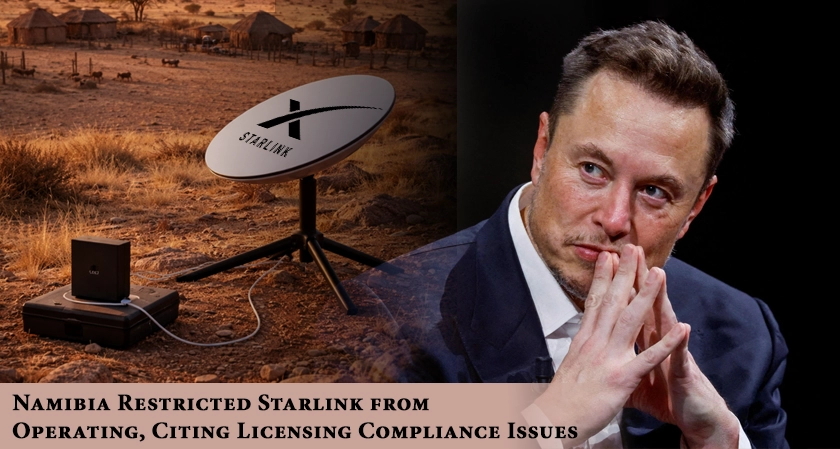
Namibia's Communications Regulatory Authority has denied Starlink an operating license, blocking Elon Musk's satellite internet service from entering the southern African nation.
Namibia has denied Elon Musk's Starlink from operating in the country, dealing a significant blow to the satellite internet provider's expansion efforts across southern Africa. The Communications Regulatory Authority of Namibia (CRAN) confirmed Tuesday that it has denied Starlink an operating license after months of negotiations.
The decision comes as Starlink has been aggressively expanding across the African continent, securing licenses in Nigeria, Kenya, Mozambique, Zambia and several other nations. Namibia had been seen as a key market given its vast rural areas with limited internet connectivity.
CRAN said Starlink failed to meet local ownership requirements and other compliance conditions set out in Namibia's telecommunications licensing framework. Under Namibian law, foreign telecommunications providers must demonstrate meaningful local participation and comply with data localization requirements.
"The authority has determined that the applicant does not meet the licensing criteria established under the Communications Act," CRAN said in a statement. "The decision was taken in the interest of ensuring that all telecommunications services operating in Namibia comply with the legal framework designed to protect consumers and promote local economic participation."
Starlink did not immediately respond to requests for comment. The company has faced regulatory hurdles in several African countries, with South Africa also denying it a license earlier this year over similar ownership requirements. In contrast, neighboring Botswana granted Starlink approval in 2024.
The decision drew mixed reactions. Some welcomed the protection of local telecommunications companies, which have invested heavily in expanding fiber and mobile broadband networks. Others expressed frustration that rural communities would continue to lack reliable internet access.
"We have communities that have been waiting for connectivity for years," said John Walenga, a technology policy researcher based in Windhoek. "Starlink could have bridged that gap almost overnight. Instead, we are stuck with slow progress while the regulatory process plays out."
CRAN said it remains open to reconsidering Starlink's application if the company addresses the outstanding compliance issues. The regulator encouraged Starlink to engage with local partners and develop a proposal that meets Namibia's legal requirements.
As Namibia blocks Starlink's entry over licensing compliance concerns, The Silicon Review examines the growing tension between the rapid expansion of satellite internet services and the regulatory frameworks African nations are using to protect local telecommunications industries and ensure their laws are respected.