>>
Industry>>
Nanotechnology>>
Advanced MRI technology: New M...Advanced MRI technology: New MRI Sensors Detect Target Molecules with High Sensitivity
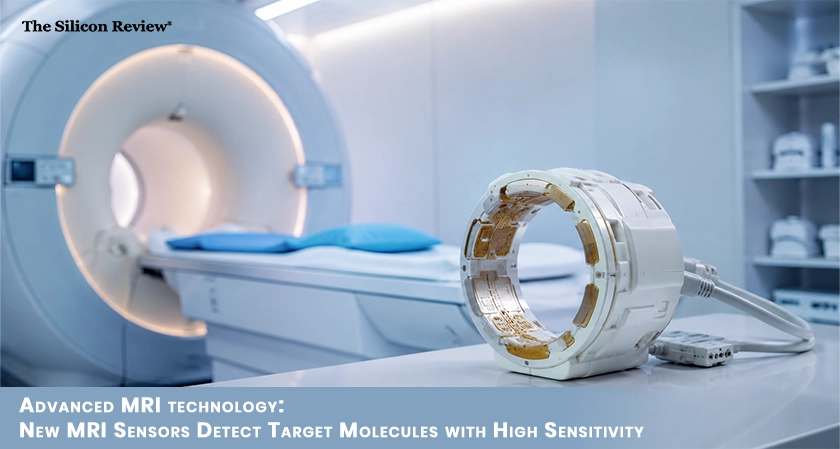
MIT engineers developed advanced MRI technology sensors using nanoscale lipid vesicles to detect dopamine and serotonin. The Silicon Review reports on the breakthrough that maps brain activity and monitors drug delivery.
MIT engineers have developed a new class of advanced MRI technology sensors using nanoscale lipid vesicles that can detect specific target molecules in the brain and body with unprecedented sensitivity. The breakthrough technology could enable real-time tracking of brain activity and targeted drug delivery monitoring.
The advanced MRI technology sensors utilize a novel design that changes the magnetic resonance signal when the sensor binds to a specific molecule. Unlike traditional MRI contrast agents that show anatomy but not chemistry, these sensors provide molecular-level information about the chemical environment. The team successfully tested the sensors by detecting dopamine and serotonin, two critical neurotransmitters involved in mood, reward, and motor control.
The researchers engineered the sensors to be highly specific for their target molecules, reducing false positives from other chemically similar compounds. Each sensor consists of a nanoscale lipid vesicle containing gadolinium ions, a standard MRI contrast agent. The vesicle is studded with proteins called membrane-anchored ligand-gated ion channels. When a target molecule binds to the protein, the channel opens, allowing water molecules to interact with the gadolinium ions and produce a measurable change in the MRI signal.
In animal models, the advanced MRI sensors successfully detected dopamine release in the brain triggered by standard rewards. The sensors were also able to detect changes in dopamine levels in response to therapeutic interventions, opening the door for personalized treatment monitoring for neurological and psychiatric disorders. The sensors could be designed to detect virtually any molecule by swapping the binding protein.
Beyond neuroscience, the technology has applications in drug delivery. The sensors can confirm that a therapeutic agent has reached its intended target before treatment begins. A cancer drug could be packaged with a sensor designed to detect a marker specific to a tumor type. If the sensor lights up on an MRI scan, the drug can be administered with confidence that it will reach its target.
The team is now working to extend the technology to detect multiple molecules simultaneously and to develop sensors that can remain in the body for extended periods. The MIT research was funded by the National Institutes of Health and the National Science Foundation.
As MIT engineers develop new advanced MRI sensors that detect target molecules in the brain and body, The Silicon Review examines how this breakthrough could transform both neuroscience research and precision medicine.
Q: How do the new advanced MRI sensors work?
A: The sensors use nanoscale lipid vesicles containing gadolinium ions. When a target molecule binds to a protein on the vesicle's surface, water molecules interact with the gadolinium ions, producing a measurable change in the MRI signal.
Q: What molecules have the advanced MRI sensors successfully detected?
A: The MIT team successfully tested the sensors by detecting dopamine and serotonin, two critical neurotransmitters involved in mood, reward, and motor control.
Q: How are the new advanced MRI sensors different from traditional MRI contrast agents?
A: Traditional contrast agents show anatomy but not chemistry. The new sensors provide molecular-level information about the chemical environment, detecting specific target molecules rather than just imaging structures.
Q: Could the advanced MRI sensors be used for drug delivery?
A: Yes. A cancer drug could be packaged with a sensor designed to detect a marker specific to a tumor type. If the sensor lights up on an MRI scan, the drug can be administered with confidence that it will reach its target.
Q: Can the advanced MRI sensors be customized for different molecules?
A: Yes. The sensors could be designed to detect virtually any molecule by swapping the binding protein on the vesicle's surface.
Q: What are the next steps for this technology?
A: The MIT team is working to extend the technology to detect multiple molecules simultaneously and to develop sensors that can remain in the body for extended periods.