>>
Industry>>
Supply chain management>>
Kenya Fuel Price increase as S...Kenya Fuel Price increase as Supply Tightens amid Global Oil Crisis
The Silicon Review
17 April, 2026
Author:
The Silicon Review Team
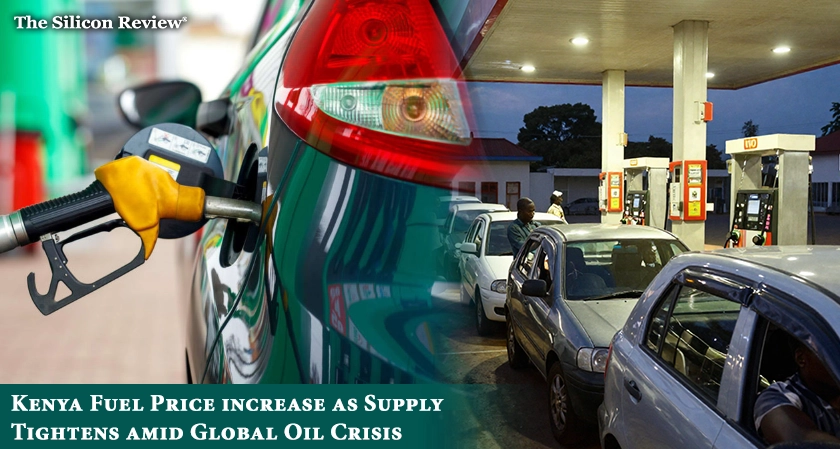
Kenya fuel price increase by 7% on Thursday as the global oil crisis tightened supply across East Africa. The Silicon Review reports on the Energy Authority's move that pushes petrol to 211 shillings per liter in Nairobi.
Kenya fuel price increase by 7%, marking the third consecutive monthly increase as the global oil crisis continues to tighten supply across East Africa and strain household budgets. The Energy and Petroleum Regulatory Authority (EPRA) increased the maximum retail price of petrol by 14 shillings to 211 shillings ($1.62) per liter in Nairobi. Diesel rose by 12 shillings to 197 shillings ($1.51) per liter, while kerosene increased by 11 shillings to 189 shillings ($1.45) per liter. "The adjustments reflect the continued disruption of global supply chains due to the ongoing Middle East conflict and the effective closure of the Strait of Hormuz," EPRA Director General Daniel Kiptoo said in a statement. "Kenya, like many non-oil-producing nations, is a price taker in international markets."
The price increase comes as Kenya faces a severe supply crunch. A tanker carrying 80,000 metric tons of refined petroleum destined for Mombasa has been stuck off the coast of Oman for three weeks, unable to secure insurance to transit the conflict zone. Two additional cargoes scheduled for April delivery have been canceled by suppliers citing force majeure.
Kenya imports all of its refined fuel, with approximately 60% coming from Gulf countries. The country's strategic fuel reserves currently stand at just 18 days of consumption, well below the 90-day target set by the East African Community.
The government has activated emergency measures, including waiving port storage fees to encourage traders to hold larger inventories and expediting the release of a previously planned 15% fuel subsidy. However, Treasury officials acknowledged that the subsidies cannot be sustained indefinitely given the government's own budget pressures.
Transport operators warned that the price increase would inevitably lead to higher fares and freight costs. "Every shilling added to diesel prices ripples through the entire economy," said Matatu Owners Association chairman Simon Kimutai. "Food, building materials, even school fees everything will cost more."
The crisis has exposed Kenya's vulnerability as a net fuel importer with limited refining capacity. The country's sole refinery, the Kenya Petroleum Refineries Limited in Mombasa, has been operating as a storage facility since 2013 and has no active refining capability.
As Kenya implements its third consecutive price increase and faces a critical supply crunch, The Silicon Review examines how the global oil crisis is exposing East Africa's vulnerability to distant conflicts and why a country with no refining capacity and just 18 days of reserves cannot afford to be a price taker for much longer.
About the Author
Sashindra Suresh is an experienced writer specializing in artificial intelligence, software development, and emerging technologies. With a strong ability to translate complex technical concepts into clear, engaging insights, she has contributed to a wide range of publications and platforms. Her work focuses on making cutting-edge innovations accessible to both industry professionals and curious readers alike.
MOST VIEWED ARTICLES
RECOMMENDED NEWS







LATEST NEWS


Artificial Intelligence News
Startups News


_2025-11-17_06-38-14.webp)