>>
Industry>>
Gaming and vfx>>
Cutting Out Apple and Google: ...Cutting Out Apple and Google: Is owning a webstore the best strategic move by game developers?
In Europe, the app store wall has already started to crack. The European Commission now says developers can offer alternative app stores on iPhones and iPads, guide users to offers outside app stores, and even distribute apps from their own websites in some cases. Apple has also said it will allow approved developers in the EU to distribute apps directly from their sites. For game studios, this is not a small policy detail. It is a sign that the old mobile model, where Apple and Google controlled most of the path from install to payment, is being challenged.
That shift lands at an important time for game developers. Mobile games are no longer built around one quick download. The best titles are live services with daily rewards, timed events, paid items, social features, and long-term accounts. In that world, the store is not just a place to process a payment. It is part of the player relationship.
Why Card Games Put Platform Strategy in Focus
Card games show why gaming platforms are becoming more than download channels. They depend on rhythm, trust, skill, repeat sessions, and a sense of progress. A player may open the same game during a break, return later for a longer table, and come back again when a timed event or special format appears. That pattern makes the platform relationship important because the experience is not a one-time sale. It is a loop.
I know that talking about games in general is too broad to apply the point perfectly, but we can look deeper into formats with a global presence, since data is always stronger when taken as a whole rather than from one location only. Among table games, poker is definitely one of the most respected, whether in the US, Europe, or Australia.
Players understand the core flow, but the poker game on mobile devices adds layers that make the game fit modern habits. Tables can be fast or slow. Matchmaking can place users into suitable rooms. Random card shuffling systems keep outcomes fair and unpredictable, and much more.
The player journey often stretches across many sessions, not just one install. A developer can use an owned store to offer value packs, loyalty rewards, seasonal bundles, and account-based extras that match the way players already engage. The store becomes part of the service layer around the game.

This is an example of a bonus system that modern gaming sites may offer. It shows how established the reward system has become.
Gaming platforms also shape how developers learn from players. Inside a standard store path, the purchase moment is often narrow. On an owned webstore, a studio can study which bundles appeal to regular players, which event rewards bring people back, and which payment options fit different regions. That data can feed better design choices. It can help teams build smarter events, clearer offers, and more useful rewards.
The Data Case for Owning the Checkout
The business case becomes clearer when the market is viewed through reach, spend, and engagement. Mobile is still the widest gateway to games, but scale alone is not the full story. Developers now need to make each active relationship count. A webstore helps because it can sit beside the app experience and serve known players with account-based offers, payment choice, and direct communication.
|
Market |
Recent data point |
Strategic meaning for developers |
|
Global mobile reach |
5.83 billion unique mobile users in April 2026 |
The addressable audience for mobile-first games remains huge. |
|
Smartphone base |
7.648 billion smartphone connections, about 89% of mobile phones in use |
More users can access richer game experiences and web purchases. |
|
Game download volume |
52 billion game downloads across mobile, PC, and console in 2025 |
Discovery is still active, but developers must convert attention into lasting value. |
|
Mobile game spending |
$82 billion in mobile in-app purchase revenue in 2025 |
The market supports large repeat-spend models when engagement is strong. |
These numbers point to a simple shift: The install is still important, but the account is becoming more valuable. Recent figures indicate the size of the mobile device base, while Sensor Tower’s 2026 gaming report shows that mobile still drives huge download volume and major in-game spending. For a developer, that means an owned webstore is less about replacing app stores and more about adding a controlled layer for the most engaged players.
A good webstore also supports better timing. Instead of waiting for the player to notice an in-app offer, a studio can connect web offers to events, newsletters, community pages, and account dashboards. The practical value is margin, but also flexibility. Developers can test bundles, as already mentioned above, reward returning users, localize payment options, and build a cleaner purchase path for players who already trust the game.
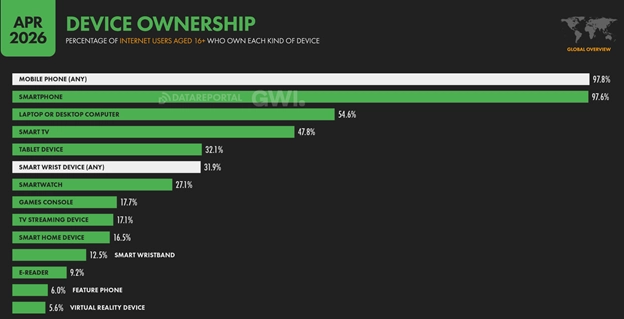
The chart shows the huge gap between mobile ownership and any other device, which makes the role of app stores significant.
From Store Presence to Relationship Ownership
The next stage of game commerce will likely be mixed, not either-or. App stores will remain important for discovery, safety signals, updates, and broad reach. Owned webstores will matter most after trust has been built. That makes them especially useful for games with daily habits, social loops, collection systems, timed events, and account-based progress.
Here is what a 2025 market report says: “Right now, the games market is steady but strategic.” The same report placed 2025 game revenues at $188.8 billion and the global player base at 3.6 billion, with revenues expected to reach $206.5 billion by 2028.
A webstore only works when the experience feels seamless
Still, ownership brings responsibility. A webstore has to feel seamless, safe, and worth using. Players will not move to a separate purchase path just because it exists. They need clear value, simple account login, familiar payment choices, and rewards that connect back to the game instantly. The best stores will feel like part of the game’s service, not a detached shop.
Why the smartest developers treat it as infrastructure
For developers, the strategic move is to treat the webstore as infrastructure. It should connect with live events, player accounts, support systems, analytics, and community channels. When it does, it can improve revenue quality and deepen loyalty without asking the main app store path to do all the work.
Owning a webstore is not the best move for every game, but for developers with loyal players and live content, it is becoming one of the clearest ways to own more of the future relationship.