>>
Industry>>
Environmental sustainability>>
Extreme Heat Wave Drives Recor...Extreme Heat Wave Drives Record Global Fires as El Niño Looms, Scientists Warn
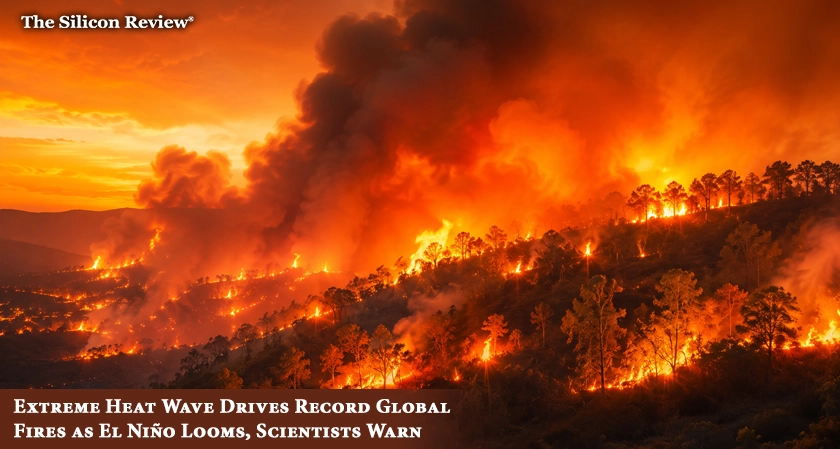
URL slug: Extreme heat wave conditions have driven record-breaking global fire outbreaks, burning over 150 million hectares since January. The Silicon Review reports on scientists' warnings that El Niño could trigger unprecedented weather extremes.
Scientists are sounding an urgent alarm as extreme heat wave conditions and climate change have driven record-breaking fire outbreaks across Africa, Asia and other regions, with forecasts indicating the situation will worsen as the northern hemisphere summer approaches and El Niño weather patterns intensify .
The World Weather Attribution research group reports that fires from January to April 2026 have already burned more than 150 million hectares of land, a staggering 20 percent increase over the previous record. The damage is unprecedented for this early stage of the global fire season.
Africa has been hit hardest, with approximately 85 million hectares scorched 23 percent above the previous record of 69 million hectares. Scientists attribute this surge to rapid shifts from extremely wet to extremely dry conditions. High rainfall during the previous growing season produced abundant grass growth, which then became fuel for drought- and heat-induced savannah fires.
Asia has also suffered devastating losses, with nearly 44 million hectares burned so far this year almost 40 percent more than the record set in 2014. India, Myanmar, Thailand, Laos and China are among the worst-affected nations.
The World Meteorological Organization has confirmed that El Niño conditions are expected to begin this month. This natural climate pattern, caused by warming sea surface temperatures in the Pacific Ocean, typically brings severe heat and drought to Australia, Indonesia and parts of southern Asia, while potentially causing flooding in other regions.
"If there is a strong El Niño later this year, there is a serious risk that the effect of climate change and El Niño ... will result in unprecedented weather extremes," warned Friederike Otto, climate scientist at Imperial College London and co-founder of World Weather Attribution.
Wildfire expert Theodore Keeping of Imperial College London cautioned that the likelihood of harmful extreme fires "potentially could be the highest we've seen in recent history" if a strong El Niño develops, with Australia, Canada, the United States and the Amazon rainforest particularly vulnerable .
As extreme heat wave conditions drive record global fire outbreaks and El Niño threatens to amplify the crisis, The Silicon Review examines how climate change has pushed our planet into uncharted territory and what governments must do to prepare for an unprecedented summer of fire.