>>
Industry>>
Real estate>>
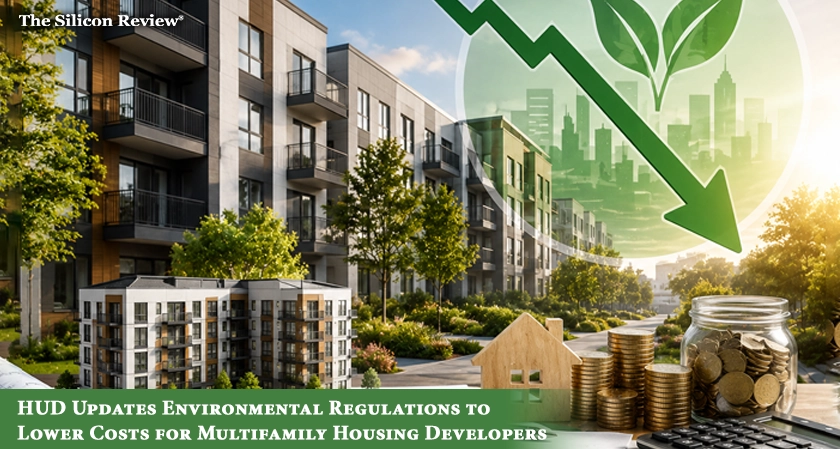
HUD Updates Environmental Regu...HUD Updates Environmental Regulations to Lower Costs for Multifamily Housing Developers
The Silicon Review
06 May, 2026
Author:
Sashindra Suresh
Nearly 40 percent of new multifamily construction costs stem from regulatory burdens, according to HUD Secretary Scott Turner. The Silicon Review reports on the agency’s environmental rule updates aimed at cutting red tape, accelerating approvals, and lowering rents for American families.
The U.S. Department of Housing and Urban Development (HUD) has finalized a sweeping update to its environmental review procedures, directly targeting the regulatory costs that HUD Secretary Scott Turner says account for almost 40 percent of new multifamily home construction expenses. The move is designed to unlock more affordable housing production by trimming federal review timelines without sacrificing environmental safeguards.
Under the revised rules, HUD will expand categorical exclusions for certain low-impact projects, including infill developments, building conversions, and repairs in existing urban zones. The agency will also allow developers to use third-party consultants for environmental assessments, reducing wait times that have historically stretched months or even years. Secretary Turner emphasized that current layered reviews often duplicate state and local processes, driving up soft costs and ultimately pushing rents higher.
The updates streamline compliance with the National Environmental Policy Act (NEPA) for multifamily projects receiving HUD financing, such as loans from the Federal Housing Administration (FHA) and capital grants. Developers will benefit from standardized checklists and faster concurrence from HUD field offices. Environmental advocacy groups have expressed cautious concern about weakened oversight, but HUD maintains that major projects affecting floodplains, wetlands, or historic properties will still require full assessments.
Industry trade groups welcomed the changes, arguing that excessive federal paperwork has discouraged thousands of potential affordable units. With housing costs remaining a top voter concern, the regulatory reset represents one of the most significant administrative actions to ease multifamily construction burdens in a decade.
As HUD recalibrates environmental rules to shave costs for multifamily developers while keeping green protections intact, The Silicon Review reports on how these updates could reshape urban housing supply, potentially lowering rents for millions as agency leaders promise continued oversight of sensitive sites.









-Recovered-Recovered-Recovered_2026-07-25_10-24-34.webp")

-Recovered-Recovered-Recovered_2026-07-25_10-03-12.webp")