>>
Industry>>
Compliance and governance>>
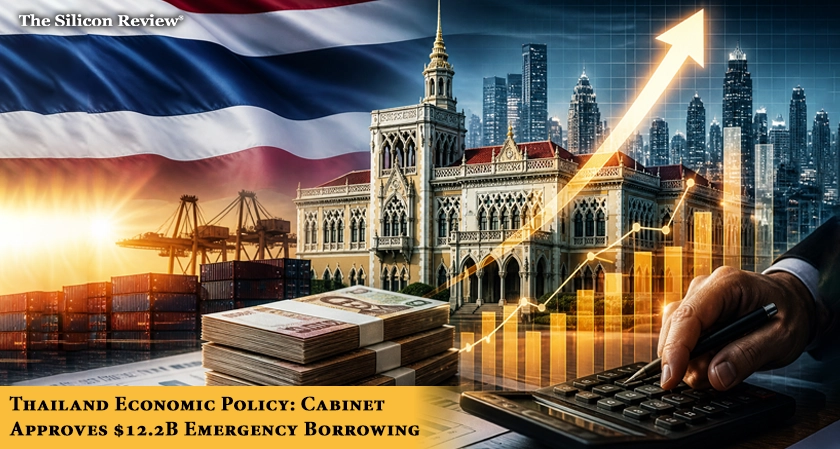
Thailand Economic Policy: Cabi...Thailand Economic Policy: Cabinet Approves $12.2B Emergency Borrowing
The Silicon Review
05 May, 2026
Author:
Sashindra Suresh
Thailand economic policy shifted as the cabinet approved a 400 billion baht ($12.2B) emergency decree to cushion Iran war impacts. The Silicon Review reports on the split-use plan and public debt remaining below the 70% ceiling.
The Thai cabinet on Tuesday approved an emergency decree authorizing 400 billion baht ($12.2 billion) in new borrowing to shield the economy from the fallout of the Middle East war, Prime Minister Anutin Charnvirakul announced.
The Thailand economic policy response represents one of the largest emergency borrowing plans in recent decades, though below levels seen during the 1997 Asian financial crisis and the COVID-19 pandemic. The loan will be deployed from June to September.
Public debt stood at 66.38% of GDP in March, below the 70% legal ceiling. The new borrowing will not breach the limit, Finance Minister Ekniti Nitithanprapas confirmed. The original loan target was reduced from 500 billion baht to demonstrate fiscal discipline to international investors.
How the 400 billion baht will be split?
First 200 billion baht ($6.1 billion) will target vulnerable groups and grassroots economic stimulus through a revised co-payment scheme. The government will cover 60% and citizens 40%, targeting 30 million people with benefits worth 4,000 baht each. State welfare card holders 13.2 million registered beneficiaries will receive an additional 4,000 baht directly.
Second 200 billion baht will fund strategic energy transition investments to reduce Thailand's heavy reliance on imported oil and gas. The investment aims to lower energy imports, boost GDP growth, and sustainably reduce the debt-to-GDP ratio.
The US-Israel war against Iran has roiled global energy markets, with oil and gas prices, shipping costs, and consumer goods all rising. Thailand's finance ministry cut its GDP growth forecast to 1.6% from 2.4% last year, while core inflation is forecast to hit 3.0% in 2026, up from an earlier estimate of 0.3%.
Prime Minister Anutin called the loan "a tool to move the country forward and prevent economic weakening," adding, "We will get through this crisis together."
SME distress signals
A survey by the Office of Small and Medium Enterprise Promotion found that 96.7% of Thai SMEs have been affected by the Middle East conflict, with 56.6% experiencing moderate to significant impact. One in five SMEs face high revenue contraction risk, with 21.3% able to sustain operations for less than three months.
As Thailand economic policy pivots to a 400 billion baht emergency borrowing to counter Iran war fallout, The Silicon Review examines how the government is balancing fiscal discipline against the risk of stagflation and why one in five SMEs may not survive the next three months without this lifeline.