>>
Women-in-Power>>
Women in Power>>
Michele Bullock - The Economic...Michele Bullock - The Economic Powerhouse Steering Australia's Financial Future
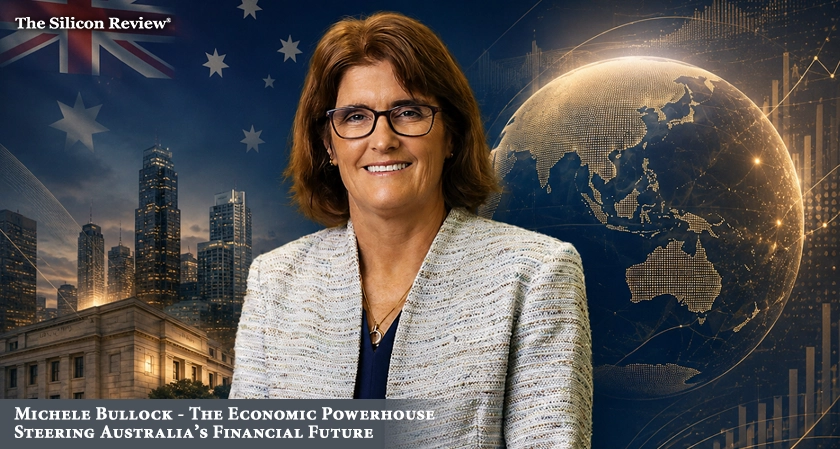
Eight times a year, the nation holds its collective breath as the Reserve Bank of Australia meets to decide the fate of interest rates. Inflation, employment, economic growth, and the daily lives of millions of mortgage holders hang in the balance. Presiding over these complex monetary decisions is Michele Bullock, one of the most powerful people in Australian economics and the first woman to hold the position of RBA Governor in its history. Her power is not defined by political grandstanding or corporate maneuvering, but by the profound responsibility of steering the nation's financial future through an era of unprecedented uncertainty. In a role where every decision impacts every Australian differently, Bullock brings a rare blend of intellectual rigour, institutional memory, and authentic leadership.
From Humble Beginnings to the Nation's Most Powerful Economic Role
Michele Bullock's journey to the top of Australian economics began not in the corridors of power, but in Armidale, where she was raised with a grounded perspective that continues to define her leadership. "I went to Armidale High School and mixed with everyone, from all socio-economic levels," she recalls. "My parents brought me up to never think that because I was a woman I could never do anything." Her father worked at the University of New England, where she completed her Bachelor of Economics with Honours in 1984. It was during her honours year that she undertook an internship at the RBA. She never left.
Over the next four decades, Bullock built her career through what she describes as an "apprenticeship", rising through the ranks in a manner almost unimaginable in today's fast-moving corporate world. She held a wide range of senior positions, including Assistant Governor for Currency, Business Services, and the Financial System, where she played a key role in managing emerging cyber and technological risks to the financial sector. When she was appointed Deputy Governor in April 2022, she made history as the first woman to hold that position. Just over a year later, on September 18, 2023, she became the ninth Governor of the Reserve Bank of Australia, inheriting an institution undergoing its most significant transformation in decades.
Leading the RBA through Transformation and Uncertainty
Bullock assumed the governorship at a time of profound institutional upheaval. A major independent review of the RBA had recommended 51 sweeping reforms relating to its policy framework, governance, leadership, and culture. "It was a time of major institutional reform," observes Dr Steven Kennedy, Secretary of the Department of the Prime Minister and Cabinet. "Michele's leadership has been central to implementing these reforms."
Her approach has been to balance deep institutional knowledge with a willingness to embrace change. While critics questioned whether someone who had thrived under the "old culture" could implement the review's recommendations, Bullock has demonstrated a commitment to transparency and accountability. She now holds press conferences eight times a year a significant increase from her predecessor's total of four across seven years and has sought to encourage more input from junior staff to counter the "groupthink" criticism levelled at the bank.
Navigating economic policy through a period of global volatility, Bullock has described the current environment as "much more uncertain and unpredictable geopolitically you never know what you are going to wake up to." In October 2025, she characterized Australia's monetary policy as "marginally tight", signalling a cautious approach to interest rate decisions while acknowledging the real-world impact on Australians. Under her leadership, the RBA delivered its first rate cut in over four years in response to a slowing economy.
Breaking Barriers and Building a Legacy
Bullock's appointment as Governor marked more than a personal achievement it signalled a fundamental shift in the culture of Australian economic leadership. When she joined the RBA in the 1980s, barely any women were represented at senior levels. She recalls occasions where she was questioned about marriage and children, or not invited to private all-male gatherings subtle reminders of the barriers that existed.
Yet she never allowed these obstacles to define her trajectory. By June 2025, women comprised 44% of RBA employees and held 40% of management roles, including four of the seven Executive Committee positions. Bullock remains chair of the RBA's Diversity and Inclusion Council and is a Member of Chief Executive Women. She has spoken forcefully about the importance of women's workforce participation, stating it is "good for women, good for businesses, good for productivity and the economy, and good for society."
She is also deeply concerned about the gender gap in economics education, noting that males still outnumber females two to one in high school and university economics courses. "In the economics profession, socio-economic diversity is also a challenge," she says. "Economics tends to get taught in private boys' schools and less and less in public schools and less and less in girls' schools." Through the RBA's public education team, she is working to create a more diverse economics student population, ensuring the profession reflects the society it serves.
Her hope is that her journey will inspire others. "I hope that my role as Governor of the RBA gives encouragement to women coming up through the ranks of Australian businesses and the public service. You can do it." In a world where economic decisions can feel abstract and distant, Michele Bullock stands as a reminder that leadership is not about status but about responsibility and impact a lesson she carries from the streets of Armidale to the highest echelons of Australian economic power.
FAQs
- Who is Michele Bullock?
She is the Governor of the Reserve Bank of Australia, the first woman to hold this position.
- What does the RBA Governor do?
The Governor oversees Australia's monetary policy, interest rates, and financial stability as the nation's top central banker.
- When did Michele Bullock become RBA Governor?
She commenced as Governor on September 18, 2023.
- How long has Michele Bullock worked at the RBA?
She joined as an intern in the mid-1980s and has been continuously employed for over 40 years.
- Where is Michele Bullock from?
She was born in Melbourne, Victoria, and raised in Armidale, New South Wales.
- What is Michele Bullock's educational background?
She holds a Bachelor of Economics with Honours from the University of New England and a Master of Science from the London School of Economics.
- What is Michele Bullock's leadership style?
She is known for being down-to-earth, transparent, and inclusive, with a commitment to honesty and candour.
- Has Michele Bullock delivered any rate cuts?
Yes, under her leadership, the RBA delivered its first rate cut in over four years in 2025.
- What is Michele Bullock's stance on gender equality?
She is a vocal advocate for women's workforce participation and chairs the RBA's Diversity and Inclusion Council.
- How many press conferences does Michele Bullock hold?
She holds at least eight press conferences a year, significantly more than her predecessors.
- What reforms has Michele Bullock implemented?
She has led the implementation of 51 recommendations from an independent review of the RBA's operations.
- Is Michele Bullock a member of any professional organisations?
Yes, she is a Member of Chief Executive Women and a signatory to the Banking and Finance Oath.
- What is Michele Bullock's approach to interest rates?
She has described policy as "marginally tight" and takes a cautious, data-driven approach.
- What challenges has Michele Bullock faced as Governor?
She has navigated geopolitical uncertainty, inflation, labour market pressures, and institutional transformation.
- Why is Michele Bullock considered powerful?
She holds one of the most influential economic positions in Australia, with decisions that impact every Australian household and business.



















Comments