>>
Industry>>
Travel and hospitality>>
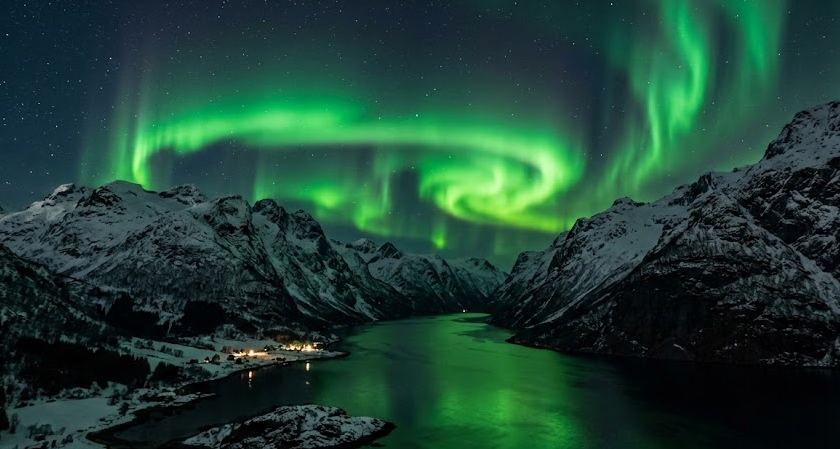
Emerald Glow of the Aurora Bor...Emerald Glow of the Aurora Borealis and the Deep Shadows of Sognefjord: Arctic Visual Wonders
The Silicon Review
26 February, 2026
Author:
The Silicon Review Team
In the far north, light does not behave predictably. It stretches, withdraws, fractures. It moves across water and mountain without asking permission. The Arctic does not rely on architecture for its spectacle; it allows atmosphere to shape perception instead.
Two very different experiences — the aurora borealis and the depths of Norway’s Sognefjord — reveal how colour and shadow define this latitude. One arrives from above in shifting ribbons. The other rests below in still, dark water edged by stone.
Light That Refuses Stillness
The aurora does not begin with certainty. The sky remains quiet for long stretches, deep blue thinning toward black. Then, almost without warning, a faint arc appears. It strengthens, curls, and spreads into green bands that hover and dissolve.
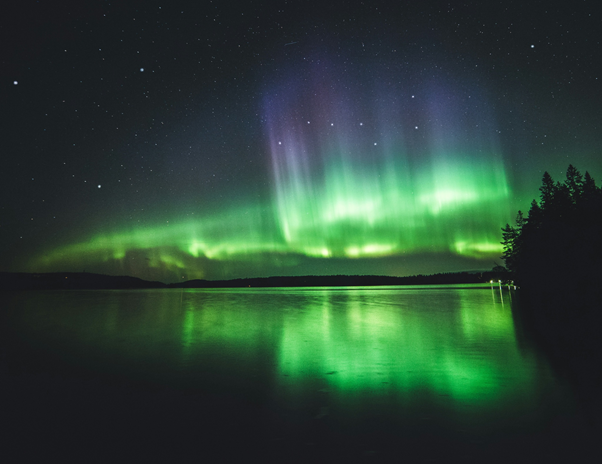
In northern Finland, travellers exploring remote landscapes through curated Finland tour packages often wait in near-silence beneath open sky. Snow absorbs sound. Trees stand motionless at the edge of frozen lakes. The horizon remains low, allowing the aurora to occupy full space above.
The colour shifts subtly — from pale green to deeper emerald, occasionally edged with hints of violet. Movement is fluid, neither fast nor slow. It seems to breathe rather than flicker.
Cloud can interrupt it without apology. The light fades as suddenly as it formed. Darkness resumes its steady hold.
Water That Holds Shadow
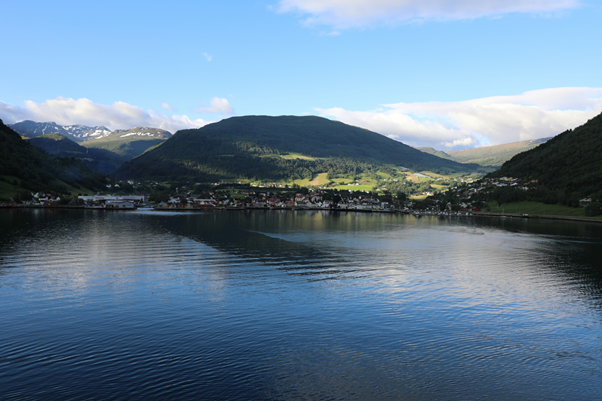
Farther west, in Norway, Sognefjord extends inland in a narrow ribbon between steep mountains. The water appears darker than expected, reflecting cliffs in muted outline. Even at midday, sections of the fjord remain in shadow where slopes block the sun.
Visitors travelling through the region on extended Norway tour itineraries often encounter the fjord by boat or by road carved into rock. The scale becomes evident gradually. Peaks rise abruptly from water. Snow lingers along higher ridges long into spring.
The fjord does not shimmer brightly. It absorbs colour. The green of surrounding forest deepens near the waterline. The sky reflects only in fragments, broken by ripples and wind.
Standing at its edge, you sense vertical weight rather than horizontal distance. Depth defines the view more than breadth.
Movement Above, Stillness Below
The aurora and the fjord occupy opposite visual registers. One dances across sky; the other anchors the land in shadow. Yet both rely on contrast. The aurora needs darkness to become visible. The fjord depends on steep slopes to maintain its depth.
Temperature shapes perception in each. In Finland, cold air sharpens the sky, making each arc appear clearer. In Norway, cool wind travels along the fjord’s surface, flattening reflections briefly before releasing them again.
Silence remains a shared element. Sound travels lightly across snow and water alike. Even when boats move through Sognefjord or cameras click beneath the aurora, the atmosphere absorbs the noise quickly.
Between Sky and Stone
Travel between these regions compresses geography but not sensation. A short flight or long drive shifts perspective from forest and open plain to towering rock and narrow inlet. The sky remains wide in both, though it performs differently.
Memory begins to overlap them. A green arc above a frozen lake aligns loosely with a pale band of light along a fjord’s edge. Shadow and glow coexist in recollection.
Neither landscape demands interpretation. They remain grounded in natural process — solar particles colliding with atmosphere, glaciers carving valleys over centuries. The spectacle arises from interaction rather than design.
When the Light Withdraws
Eventually, the aurora thins and dissolves into dark sky. Stars regain prominence. In Sognefjord, evening deepens the water’s tone until mountain and reflection merge.
Later, recalling both experiences, colour remains more vivid than detail — emerald against black, deep blue beneath stone. The Arctic reveals itself not through abundance but through contrast.
Nothing resolves into conclusion. The sky continues its silent exchanges with the sun. The fjord holds its shadowed depth beneath shifting cloud. Both persist beyond the moment of observation, shaped by forces that move slowly or suddenly, but always without announcement.