>>
Industry>>
Clean energy>>
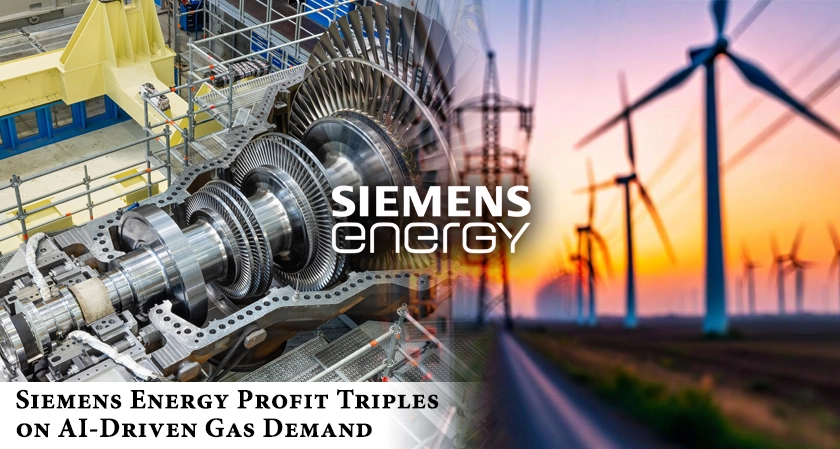
Siemens Energy Profit Triples ...Siemens Energy Profit Triples on AI-Driven Gas Demand
The Silicon Review
11 February, 2026
Author:
The Silicon Review Team
Siemens Energy reports Q1 profit nearly tripled, driven by soaring demand for gas turbines and grid tech to power AI data centers.
Siemens Energy has announced that its first-quarter operating profit nearly tripled year-over-year, far exceeding market forecasts, as surging demand from artificial intelligence infrastructure fueled orders for gas turbines and grid technology. The sharp increase was attributed to the urgent need for reliable, dispatchable power to support the massive energy consumption of new AI data centers, alongside ongoing global investments in grid modernization and energy security.
The company’s Gas Services division, in particular, reported record orders for highly efficient gas turbines, which are being deployed both for new power plants and to retrofit existing facilities to ensure grid stability amid the intermittent nature of renewable sources. The Grid Technologies unit also saw robust growth, driven by projects aimed at increasing transmission capacity and resilience. Management highlighted that the AI boom is creating a “once-in-a-generation” reinvestment cycle in power generation and distribution infrastructure.
"We are witnessing an unprecedented alignment of energy and digitalization megatrends," said the Siemens Energy CEO. "The AI revolution is not just about chips and software; it is a massive physical build-out that requires immense, reliable power. Our technology is at the heart of enabling this transition."
While the results signal a strong turnaround for the company following prior challenges in its wind power unit, Siemens Energy also reaffirmed its commitment to clean energy. It emphasized that modern gas turbines are a critical "bridge" technology, capable of running on hydrogen in the future, and essential for balancing grids as renewable penetration increases. Analysts note the performance underscores how the global push for AI is reshaping energy priorities and capital allocation, providing a powerful tailwind for traditional power equipment makers positioned at the intersection of energy security and the digital economy.