>>
Industry>>
EdTech>>
3 Challenges to Overcome for A...3 Challenges to Overcome for AI/ML Adoption in Higher Ed
The Silicon Review
12 February, 2026
Author:
The Silicon Review Team
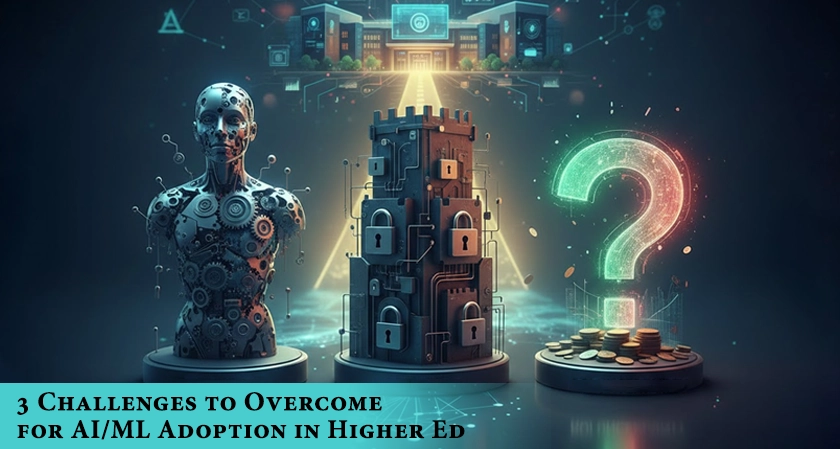
A new report identifies three critical hurdles for AI in higher ed: talent gaps, data silos, and ROI uncertainty. Strategic planning is key to seamless transition.
As universities accelerate artificial intelligence adoption to modernize IT systems and student services, a new analysis reveals three persistent challenges that threaten to derail even the most ambitious initiatives. Without a well-considered strategy, institutional leaders risk fragmented deployment, wasted investment, and widening inequity.
The single greatest technical barrier is the prevalence of isolated campus systems. Current IT markets remain largely composed of solutions that cannot communicate across functional boundaries, preventing AI from accessing the longitudinal student data required for predictive advising and personalized intervention. Experts recommend investing in centralized data architectures with robust governance frameworks to enable secure, compliant data sharing across admissions, financial aid, academic records, and student support services.
A severe shortage of AI-proficient staff similarly limits implementation capacity. Among faculty AI readiness training, only a small minority are currently using AI tools, hindered by integrity concerns, lack of training, and fear of replacement. Students report parallel anxiety, with a majority feeling unprepared for an AI-integrated workforce and lacking confidence in their skills. Bridging this gap requires systemic investment in professional development, cross-disciplinary collaboration, and structured competency frameworks that empower rather than intimidate.
As institutions move from pilot to scale, leaders also struggle to articulate AI's return on investment. Traditional measurement frameworks do not translate easily to machine learning applications where value accrues over time. Yet low-cost, high-impact models exist. One institution developed an AI intervention tool for student mental health distress with minimal development hours and negligible operating costs, successfully retaining over 150 students in its first year.
The convergence of these challenges demands intentional, institution-wide strategy rather than piecemeal experimentation. Without coherent vision, universities risk falling further behind as AI transforms not only campus operations but the very nature of teaching, learning, and workforce preparation.





















