>>
Technology>>
E commerce>>
How E-Commerce Is Disrupting t...How E-Commerce Is Disrupting the $23 Billion Funeral Industry
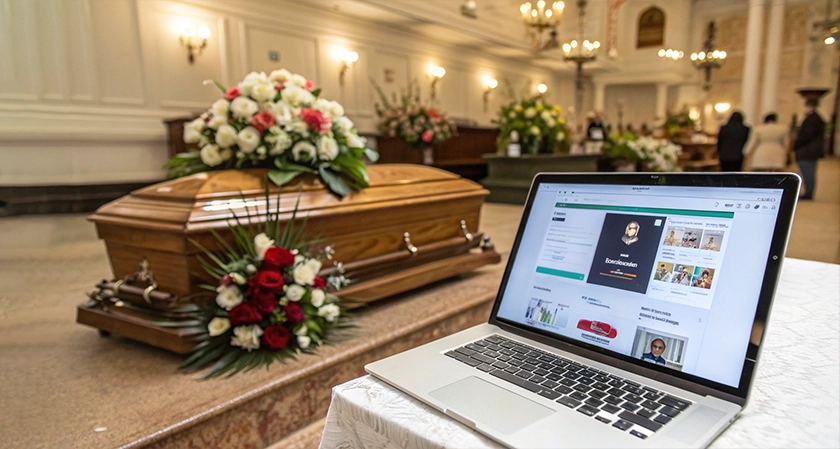
E-commerce has dismantled pricing opacity in almost every consumer vertical — from prescription drugs to eyeglasses to mattresses. The funeral industry, long considered immune to disruption due to its emotional sensitivity and regulatory complexity, is now experiencing its own direct-to-consumer reckoning. At the center of this shift is a deceptively simple product category: caskets, coffins, and cremation urns.
A $23 Billion Industry Built on Information Asymmetry
The U.S. funeral industry generates approximately $23 billion in annual revenue. Historically, it has operated under conditions that make competitive pricing nearly impossible for consumers: purchases are made under duress, within a narrow time window, with limited ability to compare options. The average consumer will arrange fewer than three funerals in their lifetime — meaning they never accumulate the purchasing experience that creates market efficiency.
The result: funeral home casket markups have traditionally ranged from 200% to 500% over manufacturer cost. A casket that retails for $3,000 at a funeral home might cost the same home $600–$800 wholesale. Families, grieving and time-constrained, rarely question the price.
The FTC Funeral Rule: The Regulation That Made Disruption Possible
In 1984, the Federal Trade Commission enacted the Funeral Rule, which mandated itemized pricing disclosure and — crucially — prohibited funeral homes from refusing externally purchased caskets or charging handling fees for them. This regulation sat largely dormant as a consumer protection for two decades, because there was no convenient alternative source. Then the internet arrived.
The rise of e-commerce created the infrastructure for direct-to-consumer funeral product sales: online catalogues, manufacturer relationships, and logistics networks capable of delivering large items within 24 hours. The FTC rule, suddenly, had teeth.
The Direct-to-Consumer Model in Action
Direct-to-consumer funeral product retailers operate on a simple model: establish relationships with manufacturers, list products online with transparent pricing, and handle delivery logistics. Consumers can buy caskets online, browse coffins in multiple materials and styles, or select cremation urns — all with full specifications, real product photography, and pricing that reflects actual manufacturing costs, not the emotional premium of a showroom purchase.
For families who want additional support beyond the product purchase, a funeral concierge service provides end-to-end guidance through the entire planning process — from comparing funeral homes to coordinating product delivery and service logistics.
The Technology Behind the Logistics
The logistical challenge of delivering a casket is non-trivial: these are large, heavy, structurally sensitive products with zero tolerance for damage. The solution involves dedicated freight partnerships, white-glove delivery services, and tightly integrated order-management systems. Leading DTC operators maintain inventory at strategically located warehouses to ensure next-day or 48-hour delivery across most of the continental United States.
Customer-facing dashboards allow families to track delivery in real time — a level of transparency that stands in stark contrast to the traditional funeral home experience. Order management integrates with funeral home scheduling, ensuring smooth coordination even in compressed timeframes.
What This Means for Funeral Homes
Traditional funeral homes have responded to DTC competition in several ways: some have lowered casket prices to remain competitive, others have emphasized service differentiation, and a growing number have begun partnering with DTC providers rather than competing with them. The outcome for consumers is unambiguously positive: more options, more transparency, and significantly lower costs.
Industry analysts estimate that DTC funeral product sales have grown at 15–20% annually over the past five years, accelerated by pandemic-era shifts in online purchasing behavior and increased consumer comfort with e-commerce for high-value items.
Conclusion: The Democratization of Funeral Products
The disruption of the funeral industry follows the same pattern as every other sector e-commerce has touched: it permanently changes the pricing dynamic. Families who once had no choice but to accept a funeral home's casket at their listed price now have access to equivalent coffins and urns at a fraction of the cost. In an industry where the casket accounts for 30–40% of total funeral spend, that shift is not marginal — it is transformative.