>>
Industry>>
Capital Market>>
BOJ's Himino Calls for Holisti...BOJ's Himino Calls for Holistic Approach on Global Monetary System
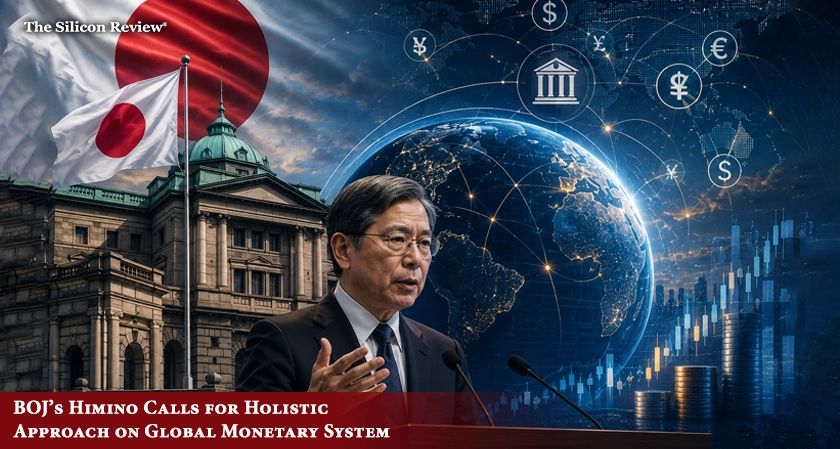
BOJ Deputy Governor Ryozo Himino called for a holistic approach to reforming the global monetary system as US-Iran war strains financial infrastructure. The Silicon Review reports on his Tokyo speech outlining four structural vulnerabilities.
Bank of Japan Deputy Governor Ryozo Himino has called for a fundamental reassessment of the global monetary system, warning that the US-Iran war has exposed structural vulnerabilities that no single central bank can address alone. Speaking at the International Conference on Exchange Rates and International Finance in Tokyo, Himino argued that the current system designed in the post-Bretton Woods era is failing to provide adequate stability for cross-border capital flows and trade settlement.
The BOJ's second-in-command outlined four specific areas requiring coordinated action: exchange rate volatility amplification, dollar funding strains in emerging markets, fragmentation of payment systems, and the lagging integration of digital currencies into the international monetary architecture. Himino warned that the closure of the Strait of Hormuz has exacerbated dollar liquidity shortages across Asia, forcing central banks to tap swap lines at unprecedented speed.
Microsoft's treasury team, which manages one of the largest corporate foreign exchange exposures globally, has been actively monitoring BOJ signals as part of its broader Asia-Pacific risk management strategy. According to The Silicon Review's analysis, the tech giant's finance division has flagged yen-dollar volatility as a top-three earnings risk for fiscal 2027.
Himino's call comes as the global monetary system faces simultaneous pressures from three directions: the US Federal Reserve's balance sheet contraction, China's renminbi internationalization push, and the Iran war's disruption of dollar-denominated oil trading. The BOJ deputy governor specifically noted that dollar funding through the Swiss franc and euro has become "unreliable" since the conflict began.
By the third quarter of 2026, analysts expect G7 finance ministers to formally discuss Himino's holistic framework proposal at the annual IMF-World Bank meetings in Washington. The proposal is expected to include coordinated intervention protocols, expanded swap line networks, and a roadmap for integrating central bank digital currencies into cross-border settlement systems.
The Silicon Review tracks this development as evidence that the post-Bretton Woods monetary order which has governed global finance since 1971 is entering its most significant reform debate since the 2008 financial crisis, with Japan positioning itself as a bridge between Western and emerging market perspectives.
Q: Who is Ryozo Himino and why is his call significant?
A: Ryozo Himino is the Deputy Governor of the Bank of Japan, the second-highest position in Japan's central bank. His call for holistic monetary reform is significant because it comes from a G7 central banker during active wartime disruption of dollar-denominated oil trading through the Strait of Hormuz.
Q: What four vulnerabilities did Himino identify in the global monetary system?
A: Himino identified exchange rate volatility amplification, dollar funding strains in emerging markets, fragmentation of cross-border payment systems, and the lagging integration of digital currencies into the international monetary architecture.
Q: How has the Iran war affected dollar liquidity in Asia?
A: The closure of the Strait of Hormuz has severely disrupted dollar-denominated oil trading, causing dollar liquidity shortages across Asian markets and forcing regional central banks to tap currency swap lines at unprecedented speed.
Q: What is the expected timeline for G7 action on Himino's proposal?
A: By the third quarter of 2026, G7 finance ministers are expected to formally discuss Himino's holistic framework proposal at the annual IMF-World Bank meetings in Washington.
Q: What specific reforms does Himino's proposal include?
A: The proposal includes coordinated intervention protocols for exchange rate volatility, expanded central bank swap line networks, and a roadmap for integrating central bank digital currencies into cross-border settlement systems.
Q: Why is Japan positioning itself as a bridge on monetary reform?
A: Japan has strong economic relationships with both Western economies and emerging Asian markets, positioning the BOJ as a natural intermediary between developed and developing country perspectives on global monetary system reform.