>>
Industry>>
Compliance and governance>>
Waiving the Jones Act for Oil ...Waiving the Jones Act for Oil Tankers: What It Means for U.S. Energy Supply
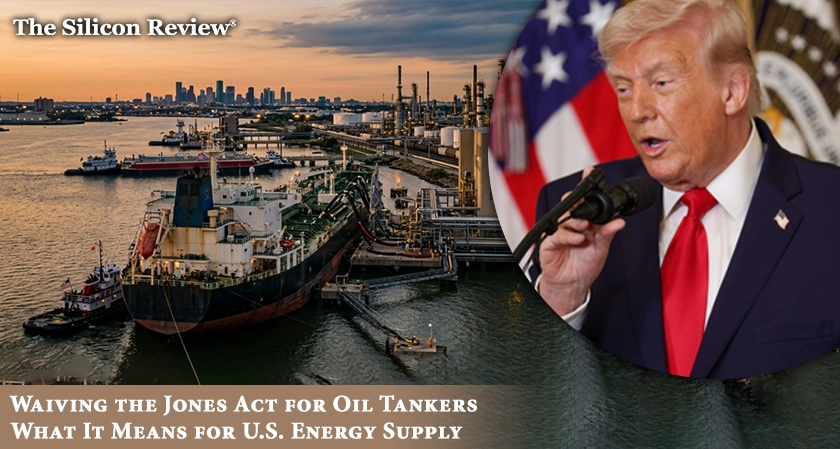
The Trump administration waived the Jones Act for 60 days to ease oil and gas shipments during the Iran conflict. Here's how the waiver process works, what it allows, and why it matters for supply chains.
The Trump administration announced a 60-day waiver of the Jones Act on March 18, allowing foreign-flagged vessels to transport oil, liquefied natural gas, fertilizer, and coal between U.S. ports. The move is designed to ease supply disruptions caused by the effective closure of the Strait of Hormuz, through which roughly one-fifth of the world's oil supply normally passes.
The Jones Act formally Section 27 of the Merchant Marine Act of 1920 requires that any cargo shipped between U.S. ports be carried on vessels that are U.S.-built, at least 75% U.S.-owned, crewed by U.S. citizens and permanent residents, and documented under U.S. law. The law exists to maintain a domestic shipbuilding industry and a merchant marine fleet available for national defense.
Waiving the act is not a simple matter. The process begins when the Department of Defense determines that a waiver is necessary in the interest of national defense. The Secretary of Defense must make a formal finding that existing U.S.-flag vessels are insufficient to meet defense requirements. That finding is then submitted to the Secretary of Homeland Security, who has authority to grant temporary waivers for up to 60 days.
The current waiver was granted under Section 501 of the Defense Production Act, which allows expedited action when the national security is threatened. DHS Secretary Kristi Noem signed the waiver after receiving a formal request from Defense Secretary Pete Hegseth, who cited the need to move fuel supplies quickly to West Coast ports amid global supply uncertainty.
The waiver applies specifically to refined petroleum products, LNG, fertilizer, and coal. It covers shipments from Gulf Coast ports to terminals in California, Oregon, Washington, and Hawaii. It does not apply to crude oil shipments or to other types of cargo.
Not everyone supports the move. The American Maritime Partnership, an industry group representing domestic shipbuilders and U.S.-flag vessel operators, argued that waiving the Jones Act "undermines the very industry that would be called upon in a true national emergency." They noted that U.S.-flagged vessels are crewed by American merchant mariners who can be activated for military sealift command duty.
The waiver expires May 18 unless renewed. In the meantime, energy companies are scrambling to charter available foreign vessels to move supplies before the window closes.
As the Trump administration temporarily waives the Jones Act to ease fuel shipments during the Iran crisis, The Silicon Review examines the legal mechanics of this century-old maritime law and what its selective application reveals about the intersection of regulation, national security, and energy supply in times of conflict.
MOST VIEWED ARTICLES
RECOMMENDED NEWS







LATEST NEWS


Artificial Intelligence News
Startups News


_2025-11-17_06-38-14.webp)