>>
Industry>>
Defense technology>>
Malaysia defense news: Norway ...Malaysia defense news: Norway Revokes Malaysia Missile Licenses over Tighter Export Controls
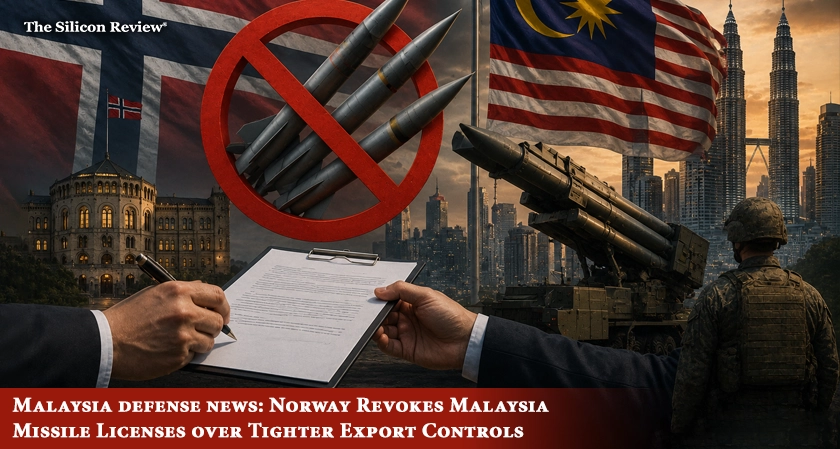
Latest Malaysian defense news: Norway revoked export licenses for Naval Strike Missiles to Malaysia, citing stricter controls limiting sales to NATO allies. The Silicon Review reports on Malaysia's diplomatic protest and USNI's force majeure analysis.
In a move that has sent shockwaves through the global weapons trade, Norway has confirmed the revocation of export licenses for the Kongsberg Naval Strike Missile (NSM) system to Malaysia, effectively canceling a €124 million ($145 million) contract signed in 2018.
The Norwegian Foreign Ministry stated the decision was "solely due to Norway's application of the export control regulations," noting that security policy landscape in Europe has "changed significantly." Under the new rules, Norway will restrict exports of its most sensitive defense technologies to "allies and closest partners." Malaysia defense news indicates that Oslo invoked a "force majeure" clause to nullify the agreement, a move Kuala Lumpur has vehemently rejected.
Malaysian Prime Minister Anwar Ibrahim expressed his "vehement objection" to the decision in a phone call with his Norwegian counterpart Jonas Gahr Støre. "Signed contracts are solemn instruments. They are not confetti to be scattered in so capricious a manner," Anwar posted on social media, warning of "grave consequences" for the Royal Malaysian Navy's (RMN) operational readiness.
Defence Minister Datuk Seri Mohamed Khaled Nordin confirmed that Malaysia has already paid nearly 95% of the contract value over RM500 million ($120 million) for the missiles intended to equip six Maharaja Lela-class Littoral Combat Ships (LCS) and Lekiu-class frigates. "I made it plain that this decision will have grave consequences for Malaysia's defence operational readiness and the LCS modernization programme," Anwar said. "If European defence suppliers reserve the right to renege with impunity, their value as strategic partner flies out the window."
Khaled confirmed he will confront his Norwegian counterpart at the Shangri-La Dialogue in Singapore to demand clarification. The government is simultaneously preparing legal action against Kongsberg, seeking not only a refund of the payments but also compensation for consequential damages.
The revocation may be linked to a U.S. component a gyroscope used in the NSM which Washington is now restricting from export to third parties. However, official statements attribute the move to Oslo's post-Ukraine war security posture. The Malaysian government is now scrambling for alternatives, likely turning to France's Exocet missile to arm the troubled LCS program.
As Norway revokes missile export licenses for Malaysia over stricter post-Ukraine war controls, The Silicon Review examines how a €124 million contract has become the latest casualty of the shifting sands of global arms diplomacy and why Kuala Lumpur is now seeking legal vengeance.
Q: Why did Norway revoke Malaysia's missile export license?
A: Norway's Foreign Ministry cited "stricter export control regulations" implemented due to the changing security policy landscape in Europe following the Ukraine war. Oslo will now restrict its most sensitive defense technologies to "allies and closest partners" a category that excludes Malaysia.
Q: What is the value of the canceled NSM contract between Malaysia and Kongsberg?
A: The contract, signed in April 2018, was valued at €124 million (approximately RM571.9 million or $145 million). Malaysia has already paid nearly 95% of the total amount.
Q: How has Prime Minister Anwar Ibrahim responded to Norway's decision?
A: Anwar conveyed Malaysia's "vehement objection" in a phone call with Norwegian PM Jonas Gahr Støre. He stated that "signed contracts are not confetti to be scattered in so capricious a manner" and warned of "grave consequences" for Malaysia's defense readiness.
Q: Is Malaysia taking legal action against Kongsberg over the canceled NSM deal?
A: Yes. Defence Minister Khaled Nordin confirmed a special committee has been formed to assess legal action against Kongsberg, seeking not only a refund of the payments made but also compensation for consequential damages resulting from the breach of contract.
Q: What is Malaysia's alternative plan to arm its LCS vessels?
A: Malaysia is scrambling to find alternatives and is likely to turn to France's Exocet surface-to-surface missile to arm the Maharaja Lela-class LCS and Lekiu-class frigates.
Q: What is the NSM's range and role in naval warfare?
A: The Naval Strike Missile (NSM) is a long-range, high subsonic cruise missile capable of striking maritime targets beyond 300 kilometres. It is fielded by Norway, Australia, the Netherlands, Poland, the UK, and the US, including the US Marine Corps.
Malaysia defense news Norway revoked export licenses for Naval Strike Missiles to Malaysia stricter controls limiting sales The Silicon Review reports diplomatic protest