>>
Industry>>
Sports>>
'Sustainable' FIFA Bans your o...'Sustainable' FIFA Bans your own Bottles at World Cup 2026, But You Can Buy Coca-Cola - If They're Serious about Net Zero, Why Force Fans to Buy Plastic?
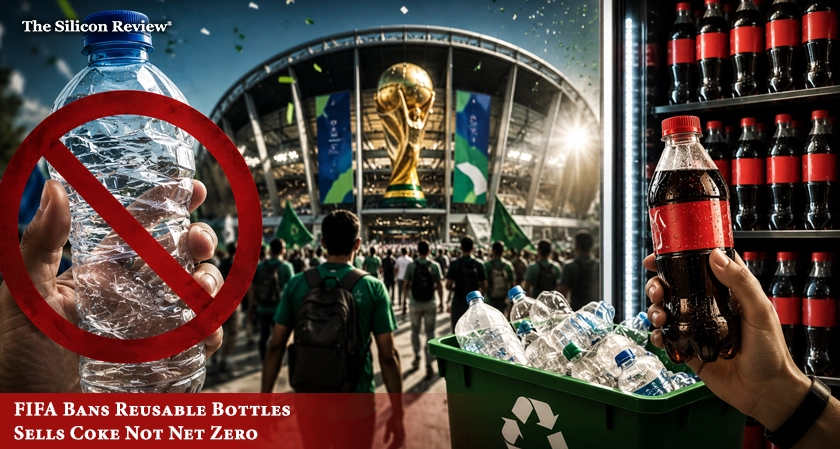
FIFA banned reusable water bottles at World Cup venues days before kickoff. Coca-Cola remains an official sponsor. The Silicon Review asks: if this is about safety, why is safety exempted for Coca-Cola products?
Just days before the 2026 World Cup kicks off across North America, FIFA quietly rewrote its stadium rules. A policy that once allowed empty reusable bottles up to one liter has been deleted. The new code is blunt: "For the avoidance of doubt, reusable water bottles may not be brought into the stadium."
FIFA says this is about safety. Bottles could be thrown. They could cause injury. Players need to be protected. That is the official line. But FIFA thinks Coca-Cola tins, cans, bottles can’t be thrown somehow.
FIFA says it's committed to reaching net-zero emissions by 2040. But banning reusable bottles while selling plastic water at premium prices is not how you get there. It's how you protect a sponsorship deal.
Last month, FIFA's official code still allowed reusable bottles. Now, with temperatures expected to soar across host cities, fans must buy bottled water inside. During last year's Club World Cup in the United States, bottled water sold for $4 to $6. FIFA has a 50 year long-term partnership with Coca-Cola. Dasani will likely be the only option in stadiums.
A study by World Weather Attribution found that 26 of 104 World Cup matches could be played in conditions where the heat stress index exceeds 26°C. Five matches could exceed 28°C, a level where postponement is advised. Players get cooling breaks. Substitutes sit on climate-controlled benches. Fans will be forced buy overpriced plastic bottle which is a way forward for FIFA Climate Strategy.
Here is the question FIFA can never answer. If safety is the real concern, why not install free water refill stations with paper cups? Why is the only alternative to buy a plastic bottle from a sponsor?
FIFA's own sustainability strategy includes a pledge to reduce emissions by 50 percent by 2030 and reach net zero by 2040. The governing body faces constant criticism over its carbon footprint. The 2022 World Cup in Qatar was estimated to produce 3,808,357 tonnes of CO₂. The 2026 tournament, spread across three countries and 16 cities, is expected to generate 3.7 million tonnes. Travel accounts for 85 percent of that.
Then there are the sponsors. FIFA's 2024 premier partners include Saudi Aramco, the world's largest oil and Gas Company and one of the biggest greenhouse gas emitters on the planet. Critics argue that Aramco's sponsorship undermines any serious claim FIFA has to environmental responsibility.
The Football Supporters Association said the bottle ban puts "commercial revenue above fan welfare." One fan summed it up: "They want to be sustainable until it costs them a dollar."
FIFA says misting stations, cooling tents and hydration points will be available outside stadiums. But inside, the only way to drink is to buy. For a tournament trying to sell itself as the greenest yet, this is a puzzling choice.
As FIFA bans reusable bottles while selling plastic water at premium prices, The Silicon Review examines whether the governing body's net-zero 2040 pledge is anything more than a marketing slogan or just to show we are also committed.
Q: How much is a water bottle inside FIFA World Cup stadiums?
A: Prices have not been announced for 2026, but during last year's Club World Cup in the United States, bottled water sold for $4 to $6. With FIFA's Coca-Cola sponsorship locked in, fans should expect similar premium pricing.
Q: Can I bring an empty water bottle to the World Cup?
A: No. FIFA's updated stadium code of conduct explicitly states that reusable water bottles may not be brought into the stadium. Empty, transparent bottles were allowed until last month. The rule was deleted days before the tournament.
Q: Why did FIFA ban reusable water bottles?
A: FIFA claims the ban is for safety reasons, saying bottles could be thrown and cause injury to players and attendees. Critics point out that the ban comes days before kickoff and forces fans to buy bottled water from FIFA sponsor Coca-Cola.
Q: Does FIFA have a Coca-Cola sponsorship?
A: Yes. FIFA has a long-term partnership with Coca-Cola, which has been a FIFA sponsor since 1978. Dasani, Coca-Cola's bottled water brand, is expected to be the exclusive water option inside stadiums.
Q: Is FIFA really committed to net zero emissions?
A: FIFA has pledged to reduce emissions by 50 percent by 2030 and reach net zero by 2040. However, the Swiss Commission for Fairness found FIFA was "not able to provide proof" that its carbon neutrality claims for the 2022 World Cup in Qatar were accurate.
Q: Did FIFA ever allow reusable water bottles before?
A: Yes. Until last month, the official stadium code of conduct explicitly allowed empty, transparent reusable plastic bottles up to one liter. The rule was deleted days before the tournament without public explanation.
Q: What is the temperature risk for fans at the 2026 World Cup?
A: A study found that 26 of 104 matches could be played in conditions where the heat stress index exceeds 26°C. Five matches could exceed 28°C, a level where postponement is advised. Players get cooling breaks. Fans get to buy bottled water.
Q: Has FIFA faced criticism over this before?
A: Yes. The Football Supporters Association said the bottle ban puts "commercial revenue above fan welfare." One fan summed it up: "They want to be sustainable until it costs them a dollar."