>>
Industry>>
Oil and gas>>
Global Oil Reserves Race Begin...Global Oil Reserves Race Begins: Did the Iran War Expose the World's Biggest Energy Vulnerability?
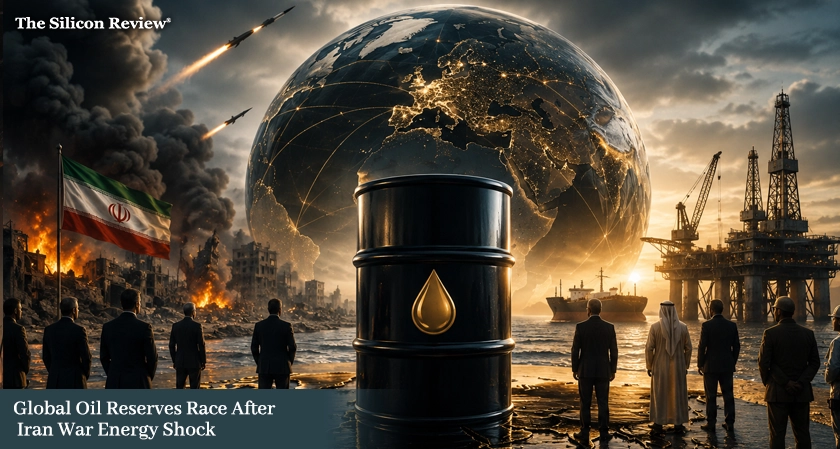
Global oil reserves are becoming the new geopolitical battleground after the Iran war exposed how vulnerable energy-importing nations remain to supply disruptions. As countries rush to build emergency stockpiles
Global oil reserves have become the center of a new energy security debate as the Iran war may be fading from the headlines, but its economic consequences are only beginning to unfold. As governments assess the damage caused by months of disruption around the Strait of Hormuz, a new global race is taking shape the race to expand global oil reserves before the next crisis hits.
The conflict exposed just how vulnerable the world remains to energy shocks. With nearly 20% of global oil and LNG supplies affected, Brent crude climbed toward $120 per barrel, supply chains came under pressure, and governments scrambled to contain rising costs. One question quickly emerged: what if emergency reserves had not been available?
Did the Iran war just trigger the biggest global oil reserves race in decades?
The answer highlighted a sharp divide between countries that were prepared and those that were not. The International Energy Agency coordinated a record release of 400 million barrels from strategic reserves, while China relied on its massive stockpile estimated at more than one billion barrels to reduce imports and avoid the worst of the disruption. In contrast, energy dependent economies such as India, Pakistan, and Thailand were forced to consider subsidies, fuel restrictions, and conservation measures as prices surged.
What happens when countries start hoarding oil at the same time?
For many governments, the lesson was simple: energy security now depends as much on storage capacity as military power. India is pursuing reserve expansion, Pakistan is evaluating new storage projects, and Australia has committed billions to strengthen fuel security. Singapore and several European nations are also reviewing their emergency stockpiles.
Even major oil exporters are taking precautions. Saudi Arabia and other Gulf producers are expanding overseas storage facilities to protect exports from future disruptions. Why? The Hormuz crisis proved that even energy-rich nations are vulnerable when critical shipping routes come under threat.
The scale is enormous. Analysts estimate new projects could add roughly 500 million barrels of storage capacity. Combined with the need to refill reserves depleted during the conflict, that could create nearly one billion barrels of additional demand in the years ahead.
Supporters say larger global oil reserves will strengthen energy security and cushion future shocks. Critics argue governments may be spending billions preparing for yesterday's crisis instead of tomorrow's.
One thing, however, is undeniable. The Strait of Hormuz disruption shattered the belief that major energy routes will always remain secure. As countries invest heavily in expanding global oil reserves, The Silicon Review asks Did the Iran war expose a critical weakness in the global energy system, or are governments rushing to build oil reserves because they fear the next supply disruption is not a question of if, but when?
FAQ:
Q: What are global oil reserves?
A: Global oil reserves are emergency stockpiles of crude oil and petroleum products maintained by governments and energy companies to protect against supply disruptions and price shocks.
Q: Why are global oil reserves suddenly becoming a priority?
A: The Iran war and disruption around the Strait of Hormuz exposed how vulnerable many countries are to sudden interruptions in energy supplies.
Q: How much oil passes through the Strait of Hormuz?
A: Roughly 20% of the world's oil supply and a significant share of global LNG exports move through the Strait of Hormuz.
Q: Which countries have the largest strategic oil reserves?
A: The United States and China are believed to hold the world's largest emergency oil stockpiles.
Q: Could expanding global oil reserves affect oil prices?
A: Yes. Building and refilling reserves could create additional demand, potentially supporting crude oil prices over the coming years.













Comments