>>
Technology>>
Cyber security>>
Iran Cyberattacks on Israel Tr...Iran Cyberattacks on Israel Tripled in One Year Raising Fresh Cyber security News Alarm. Is This the Real War Nobody Is Talking About?
The Silicon Review
29 June, 2026
Author:
Jishnuu
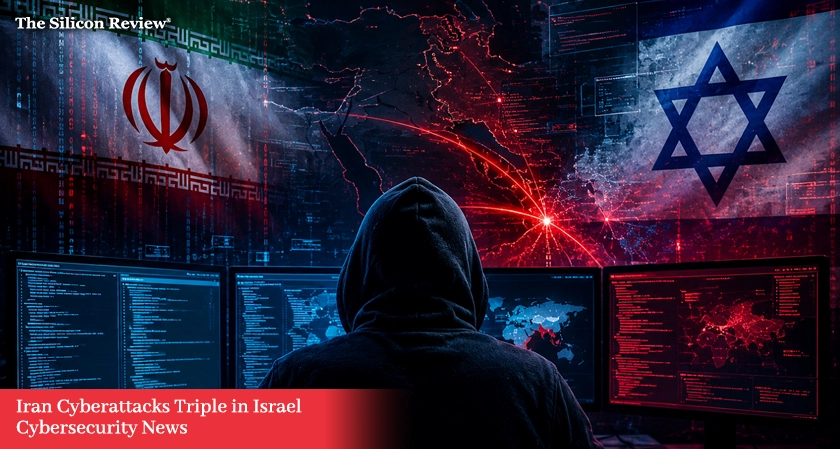
Iran cyberattacks on Israel surged from 1,600 incidents in June 2025 to nearly 4,800 in June 2026. Is the world's biggest cyber threat no longer missiles, but the hackers who can shut down an entire nation?
Israel's cyber authorities have revealed that iran cyberattacks have surged sharply since the U.S.-Israeli offensive against Iran, highlighting how cyberspace has become one of the most active fronts in the ongoing regional conflict.
According to Yossi Karadi, Director General of Israel's National Cyber Directorate, authorities recorded around 1,600 hostile cyber incidents during Israeli military operations in June 2025. By June 2026, that figure had climbed to approximately 4,800 attacks, a threefold increase that security officials say cannot be ignored.
While Missiles Dominated the Headlines, Cyberattacks Quietly Expanded Across Law Firms, Businesses, and Critical Infrastructure.
Karadi warned that many of the groups targeting Israel possess sophisticated capabilities. While officials say they have successfully protected critical infrastructure so far, attacks have increasingly targeted government systems, essential services, businesses, law firms, accounting firms, and other private organizations.
"Some groups are very skilled," Karadi said, according to the German text of the interview. "We can handle them, but we have to take them seriously. Unlike in the kinetic realm, there's no ceasefire in cyberspace."
Karadi also said several companies with weaker cyber defenses had their computer systems wiped after attackers breached their networks.
When a country's hospitals, power grids, and banks are targets, can any cybersecurity defence ever truly be enough?
Iran continues to deny launching cyberattacks against other countries, even as it reports being targeted by hackers itself. That makes it difficult to identify who is behind many attacks. But one thing is clear: cyber warfare is becoming a permanent part of Middle East tensions.
Can any country afford to ignore a war that leaves no smoke but can still cripple an economy?
For governments and businesses, the warning is impossible to miss. Today's wars are fought not just with missiles, but with malware, ransomware, espionage, and attacks on critical infrastructure. A few lines of malicious code can disrupt power, businesses, and public services without a single shot being fired.
As Iran cyberattacks continue to escalate despite reduced military activity, The Silicon Review asks if cyber warfare never pauses, is the world already fighting conflicts that most people cannot even see?
FAQ:
Q: Who revealed the increase in Iran cyberattacks?
A: The figures were disclosed by Yossi Karadi, Director General of Israel's National Cyber Directorate.
Q: What was targeted in the cyberattacks?
A: The attacks reportedly targeted critical infrastructure, government systems, businesses, law firms, accounting firms, and other organizations across Israel.
Q: Has Israel's critical infrastructure been breached?
A: Israeli officials say critical infrastructure has remained protected so far, although some companies reportedly had their computer systems wiped after cyber intrusions.
Q: Does Iran admit to carrying out cyberattacks?
A: No. Iran has consistently denied conducting offensive cyber campaigns against other countries while reporting cyberattacks on its own infrastructure.
Q: Why is this important for global cybersecurity?
A: The surge in Iran cyberattacks shows that cyber warfare is becoming a major security challenge, with the potential to disrupt economies, businesses, and essential services without traditional military action.
Q: What is cyber warfare?
A: Cyber warfare involves using cyberattacks, hacking, malware, and digital espionage to disrupt government systems, businesses, critical infrastructure, or national security without conventional military force.
Q: Why are Iran cyberattacks a growing concern?
A: Security experts warn that increasing Iran cyberattacks could target essential services, businesses, and public infrastructure, raising the risk of economic disruption and regional instability.




















Comments