>>
Other>>
Politics>>
Israel Iran Conflict: Presiden...Israel Iran Conflict: President Trump Told Prime Minister Netanyahu to absorb Iranian Missiles. Since When Does America Tell Its Closest Ally to Turn the Other Cheek?
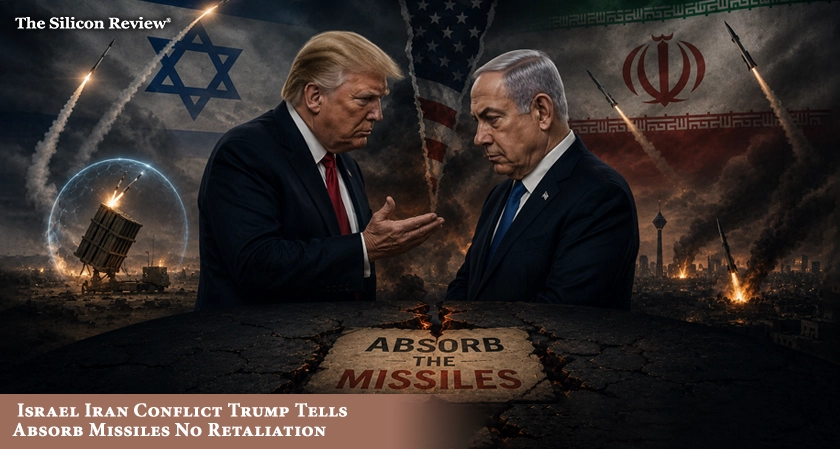
Iran fired a dozen ballistic missiles at northern Israel. President Trump immediately called Prime Minister Netanyahu and told him not to retaliate. The Silicon Review examines a historic reversal in the Israel Iran conflict.
Here is what actually happened that night.
Iran fired a volley of ballistic missiles at northern Israel. Approximately ten to twelve of them. Aimed at civilian areas. No Israelis were hurt. The missiles were intercepted or struck open ground.
But that is not the point. The point is what happened next.
Within minutes, President Donald Trump was on the phone with Prime Minister Benjamin Netanyahu. The message was not "stand strong." The message was not "we have your back." The message was: do not retaliate.
Let that sink in. For decades, the United States has backed Israel against Iran. Now, in a stunning reversal, President Trump just told Prime Minister Netanyahu to absorb a ballistic missile attack and do nothing about it. This has never happened in the history of the Israel Iran conflict.
President Trump went on television and said this: "The Iranian strikes didn't hurt anybody. Hopefully Israel is not going to retaliate. If Bibi strikes them back, it's just gonna keep going like the last 47 years, or the last 3,000 years."
He also said this: "Each of them had their fun. Israel had its strike and Iran had its strike. We don't need another one."
The missiles were fired because Israel struck a Hezbollah command center in Beirut's Dahiyeh suburb earlier that same day. Hezbollah is an Iranian proxy. Iran decided to avenge its proxy by firing directly at Israeli territory. That is not defense. That is escalation. And President Trump rewarded it by telling Prime Minister Netanyahu to stand down.
Here is the question nobody in Washington wants to answer. If Iran can fire missiles at Israel and the American response is to tell Israel to accept it, what stops Iran from firing more missiles tomorrow?
Defense Minister Israel Katz has already made Israel's position clear. "Israel categorically rejects Iran's threats," he said. "Any Iranian attempt to link Lebanon and Iran and attack Israel will be met with great force, as happened yesterday."
But Defense Minister Katz is not the one calling the shots right now. President Trump is.
The president has been negotiating a grand bargain with Iran for months. He wants a deal. He wants the Strait of Hormuz opened. He wants Iran's nuclear program capped. He wants to deliver a foreign policy victory before the midterms.
And Tehran knows it. Iran stopped communicating with US mediators through Oman last week. It is using the Lebanon war as leverage. The message to Washington is simple. You want a deal? Then you pressure Israel to stop fighting Hezbollah.
Lebanon's own president, Joseph Aoun, called this out directly this week. He accused Iran of using his country as "a bargaining chip in their negotiation with the US." He said, "It's unacceptable."
The Iranian foreign minister, Abbas Araghchi, fired back: "Had Lebanon been a bargaining chip for Iran, we'd have a deal long ago. Save Lebanon from your real foe."
Here is the truth. Iran is not defending Lebanon. It is using Lebanese blood to buy sanctions relief. And the United States president is going along with it.
Meanwhile, the fighting on the ground continues. Israeli forces have seized Beaufort Castle, a strategic Crusader-era fortress in southern Lebanon. They are pushing deeper than they have in twenty-five years. More than 3,500 Lebanese have been killed. A million have been displaced.
Hezbollah is still firing rockets into northern Israel. The Israeli army is still striking Beirut. And the ceasefire that was supposedly agreed upon in Washington last week has already collapsed.
Prime Minister Netanyahu said on Monday that the fire has ceased "at the moment." But he also warned: "If the terror regime in Iran makes the mistake of attacking us again, we will respond with force."
The question is whether President Trump will let him.
As the Israel Iran conflict takes a historic turn with President Trump telling Prime Minister Netanyahu to absorb Iranian missiles rather than retaliate, The Silicon Review asks a simple question. When did the United States start protecting Iran from the consequences of its own aggression? And what message does that send to every other American ally watching right now?
FAQ:
Q: What happened in the Israel Iran conflict on Sunday night?
A: Iran fired approximately ten to twelve ballistic missiles at northern Israel, all of which were intercepted or struck open ground.
Q: What did President Trump tell Prime Minister Netanyahu after the Iranian missile attack?
A: President Trump called Prime Minister Netanyahu and told him not to retaliate, saying both sides had "had their fun."
Q: Why did Iran fire missiles at Israel in this latest Israel Iran conflict escalation?
A: Iran said the missile attack was retaliation for an Israeli strike on a Hezbollah command center in Beirut's Dahiyeh suburb.
Q: Has Prime Minister Netanyahu agreed to President Trump's request not to attack Iran back?
A: Prime Minister Netanyahu said the fire has ceased "at the moment" but warned Iran that any future attack will be met with force.
Q: What is President Trump negotiating with Iran that might explain his response?
A: President Trump is seeking a grand bargain with Iran involving the Strait of Hormuz and Iran's nuclear program.
Q: What did Lebanese President Joseph Aoun say about Iran's role?
A: President Aoun accused Iran of using Lebanon as a "bargaining chip" in its negotiations with the United States.