>>
Other>>
Politics>>
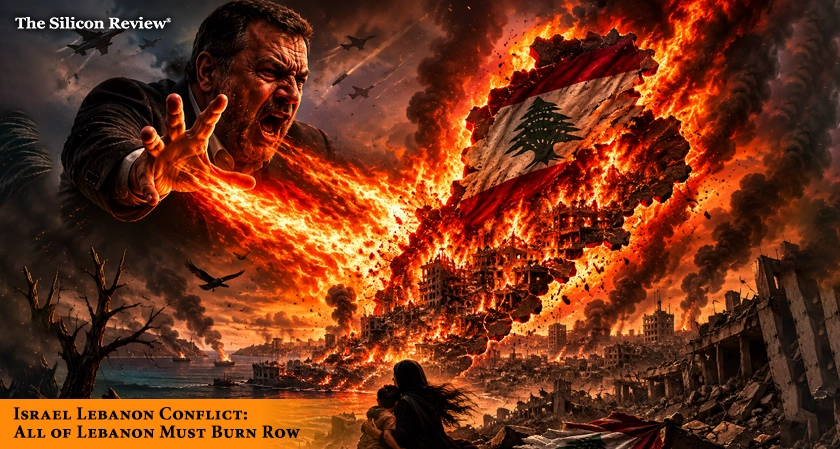
Israel-Lebanon Conflict Explod...Israel-Lebanon Conflict Explodes Again: 'All of Lebanon Must Burn' Remark Raises Fears of Endless War
The Silicon Review
19 June, 2026
Author:
Jishnuu
Four Israeli soldiers dead. Eighteen killed in Lebanon. A ceasefire already cracking. Then a minister’s words land like fuel on fire: “All of Lebanon must burn.” Is the Israel Lebanon conflict still about security, or has it turned into a war with no exit?
Israel Lebanon conflict: Israeli National Security Minister Itamar Ben-Gvir’s explosive declaration that “all of Lebanon must burn” has reignited global concerns over the future of the Israel–Lebanon conflict, after four Israeli soldiers were reported killed in southern Lebanon.
At least 18 people were killed and dozens injured after intense Israeli airstrikes struck southern Lebanon overnight. Lebanon's health ministry described the bombardment as one of the deadliest escalations in recent weeks. Israel says the operation targeted Hezbollah fighters and military infrastructure following attacks that killed four Israeli soldiers.
The Israel Lebanon conflict keeps selling the same story: one attack, one revenge strike, and another excuse to keep the fighting alive.
The violence comes just days after reported diplomatic efforts involving the US and Iran aimed at reducing regional tensions, including in Lebanon. Yet the latest strikes suggest that diplomatic agreements signed in conference rooms may be struggling to survive realities on the ground.
Israeli officials continue to maintain that military action against Hezbollah remains necessary for national security. Hezbollah, meanwhile, claims it ambushed Israeli forces, destroying military equipment and targeting troops with rockets and artillery.
"With all due respect to the Americans, Israel must make it clear to the entire world that the blood of our sons and the security of our citizens are not up for bargaining. All of Lebanon must burn," Ben Gvir said in a statement.
Ben-Gvir's statement has sparked international criticism. The far-right minister doubled down on his hardline stance, insisting that Israel should hit back harder and ignore outside pressure. His fiery remarks came as European leaders and regional governments urged calm, warning that more attacks could push the region closer to a much bigger war.
The latest escalation is also turning up the heat on Prime Minister Benjamin Netanyahu. He is facing pressure from military leaders, political allies, and international partners, all pulling in different directions. At the same time, cracks are beginning to show between Washington and parts of Israel's government, with US officials openly questioning whether endless military action has any clear plan or end goal.
As casualties mount and threats grow louder, the Israel Lebanon conflict is entering a dangerous new phase where diplomacy appears increasingly fragile and retaliation remains the preferred response. With regional tensions already running high, every strike risks triggering another, pushing the Middle East closer to a broader crisis.
The Silicon Review asks when ceasefires exist only on paper and missiles keep raining down, is peace already dead or was war always the plan?
FAQ:
Q: Why did Israel launch new strikes in Lebanon?
A: Israel says the attacks targeted Hezbollah positions after four Israeli soldiers were killed in southern Lebanon.
Q: Is the ceasefire still in effect?
A: While diplomatic agreements remain formally in place, continued military exchanges have raised serious doubts about their effectiveness.
Q: Could the conflict spread further?
A: Security analysts warn that continued escalation could draw additional regional actors into the confrontation and increase instability across the Middle East.
Q: How many people were killed in the latest strikes?
A: Lebanon's health ministry reported that at least 18 people were killed and dozens more were injured in the Israeli airstrikes on southern Lebanon.
Q: What is the position of the United States?
A: The United States has supported diplomatic efforts to reduce regional tensions while also urging all parties to avoid actions that could trigger a wider war.




















Comments