>>
Other>>
Politics>>
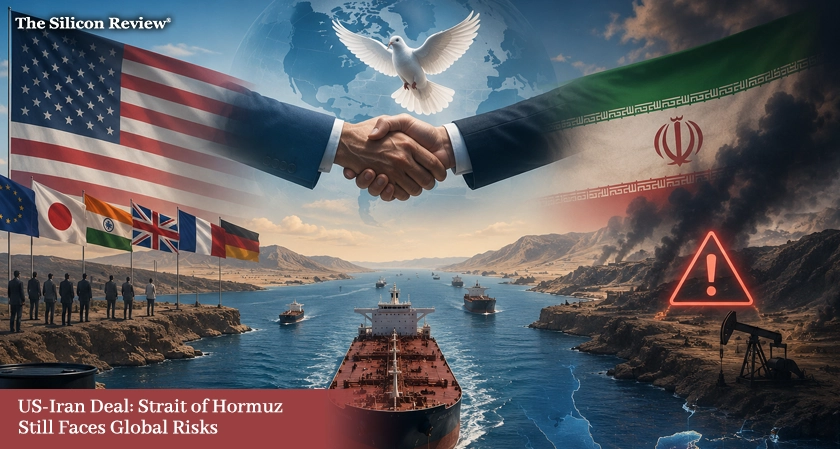
US-Iran Deal Wins Global Suppo...US-Iran Deal Wins Global Support, But If Peace Is Back, Why Are Nations Still Worried About the Strait of Hormuz?
The Silicon Review
26 June, 2026
Author:
Jishnuu
The US-Iran deal has won support from CPTPP ministers, who welcomed the reopening of the Strait of Hormuz. But if tensions are easing, why are world leaders still racing to protect trade routes and energy supplies?
The US-Iran deal may point to peace, but the Strait of Hormuz is still a danger zone. World leaders are not easing up; they are staying alert, guarding trade, and preparing for the next shock.
On Friday, ministers from the Comprehensive and Progressive Agreement for Trans-Pacific Partnership (CPTPP) welcomed the US-Iran deal, praising efforts to reopen the Strait of Hormuz and restore safe passage through one of the world's most important shipping routes.
The agreement, reached after months of conflict and escalating tensions, is expected to reduce risks to global energy supplies and commercial shipping. But the response from trade ministers raises a bigger question:
If the US-Iran deal has truly stabilized the region, why is the world still preparing for disruption?
The Strait of Hormuz remains one of the most strategically important waterways on the planet, carrying roughly one-fifth of global seaborne oil and liquefied natural gas exports. Even a brief disruption can send energy prices soaring and rattle financial markets worldwide.
That reality was reflected in the ministers' joint statement, which emphasized the need for "safe, unimpeded, and continuous transit passage" through the Strait of Hormuz.
Is this confidence in peace, or insurance against another crisis?
The CPTPP bloc also pledged to accelerate efforts to strengthen supply chain resilience and improve coordination during future disruptions. Officials warned that maintaining open markets and uninterrupted trade remains critical for economic stability.
The focus extends beyond oil. Ministers highlighted the importance of fuel, natural gas, petrochemicals, fertilizers, and other essential goods that move through the region.
If leaders believe the threat has passed, why are they still building safeguards against supply shocks?
That question sits at the center of the global reaction to the US-Iran deal. While the agreement has reduced immediate tensions, governments and businesses appear unwilling to assume that stability is guaranteed.
For now, ships continue moving through the Strait of Hormuz, markets remain calm, and diplomacy is holding. Yet the urgency of the CPTPP response suggests that confidence remains cautious. The US-Iran deal has eased tensions, but actions speak louder than headlines. Governments are still planning for disruption, not certainty. The Silicon Review asks If the Strait of Hormuz is truly secure, why is the world still preparing for the next crisis?
FAQ:
Q: Why is the Strait of Hormuz so important?
A: The Strait of Hormuz is one of the world's busiest shipping lanes, carrying nearly 20% of global oil and large volumes of liquefied natural gas.
Q: Why did CPTPP ministers welcome the US-Iran deal?
A: They believe the US-Iran deal can help restore safe navigation, protect energy supplies, and reduce risks to global trade.
Q: How could the US-Iran deal affect the global economy?
A: A stable US-Iran deal can help keep oil prices steady, protect supply chains, and improve confidence in global markets.
Q: Is the Strait of Hormuz completely safe now?
A: No. While tensions have eased, governments and businesses remain cautious because any disruption in the Strait of Hormuz could quickly impact energy markets and international trade.
Q: What happens if the US-Iran deal breaks down?
A: If the US-Iran deal fails, tensions could rise again, oil prices could jump, and global shipping through the Strait of Hormuz could face fresh risk.
Q: Which countries are most affected by the Strait of Hormuz?
A: Countries that depend on oil, gas, and global shipping, including major Asian and European economies, are most affected by the Strait of Hormuz.

















Comments