>>
Other>>
Politics>>
US Strikes Iran: Is This Retal...US Strikes Iran: Is This Retaliation or the Start of a Bigger Middle East War?
The Silicon Review
08 July, 2026
Author:
Jishnuu
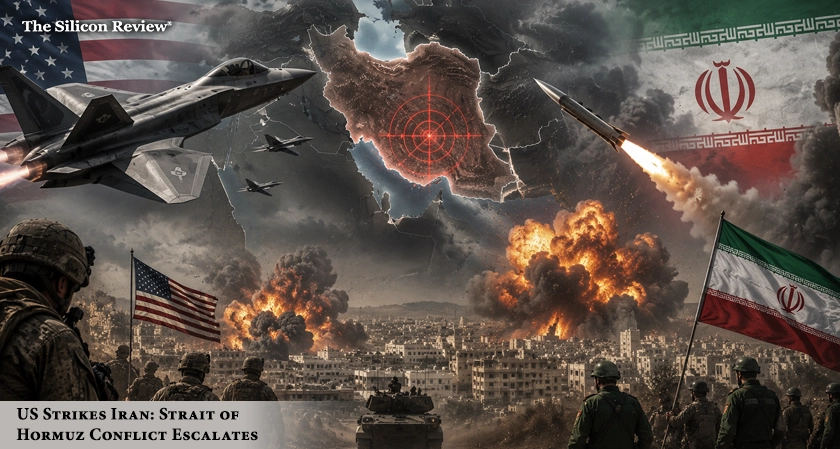
US strikes Iran after attacks on oil tankers in the Strait of Hormuz, triggering Iranian missile strikes on American military bases. As both sides trade fire despite a recent ceasefire deal, is diplomacy already dead?
The fragile calm in the Middle East has been shattered once again after US strikes Iran in response to attacks on commercial oil tankers in the Strait of Hormuz. Washington says it acted to protect global shipping. Tehran says America has crossed the line.
Within hours, the conflict escalated.
The US confirmed it struck more than 80 Iranian-linked targets, including over 60 Islamic Revolutionary Guard Corps (IRGC) fast attack boats and military sites near Bandar Abbas, Sirik, and Qeshm Island. Iranian state media reported explosions, damage, and injuries following the strikes.
If America wanted to stop the fighting, why did it choose to raise the stakes?
The strikes followed attacks on three commercial oil tankers passing through the Strait of Hormuz, one of the world's most important oil routes. While Iran has not officially claimed responsibility, the US says the attacks were serious enough to justify immediate military action.
Tehran fired back just hours later.
"The era of bullying and extortion is over. It leads nowhere. We don't fold," Iranian Parliament Speaker Mohammad Bagher Ghalibaf wrote on X.
Iran announced missile attacks on American military facilities in Bahrain and Kuwait, calling them a direct response to what it described as "US aggression." Iranian leaders also accused Washington of tearing apart the recently signed memorandum of understanding (MoU), which was supposed to extend the ceasefire and prevent exactly this kind of confrontation.
"The naval and aerospace forces of the Islamic Revolutionary Guard Corps, in a joint missile and drone operation, struck 85 key American military installations at Salman Port, the US Fifth Fleet area in Bahrain," the IRGC says in a statement.
So what was the ceasefire worth if both sides were preparing for the next strike?
The Strait of Hormuz carries nearly one-fifth of the world's oil supply. Every missile launched and every ship attacked sends a warning far beyond the Gulf. Markets are watching. Governments are watching. Oil prices are already under pressure.
NATO Secretary General Mark Rutte defended the American operation, saying the strikes were "absolutely necessary" after repeated attacks on shipping. Iran rejected that claim, insisting the US, not Tehran, destroyed the agreement first.
For now, the US strikes Iran campaign and Iran's retaliation have deepened uncertainty across the Strait of Hormuz. The Silicon Review asks if military action is meant to restore stability, why does every strike seem to push the region closer to another war?
FAQ:
Q: Why did the US strike Iran?
A: The US strikes Iran operation was launched after attacks on commercial oil tankers in the Strait of Hormuz, which Washington says threatened global shipping and regional security.
Q: How did Iran respond to the US strikes?
A: Iran fired missiles at American military sites in Bahrain and Kuwait, calling the attacks a direct response to US military action.
Q: Why is the Strait of Hormuz important?
A: The Strait of Hormuz is one of the world's busiest oil shipping routes, carrying nearly 20% of global crude oil supplies.
Q: Did Iran claim responsibility for the tanker attacks?
A: No. Iran has not officially claimed responsibility for the attacks on the commercial oil tankers.
Q: What could happen if tensions continue?
A: Continued escalation between the US and Iran could disrupt oil supplies, drive up global energy prices, and increase the risk of a wider regional conflict.




















Comments