>>
Industry>>
Legal>>
Burden of Proof in Personal In...Burden of Proof in Personal Injury Cases Explained
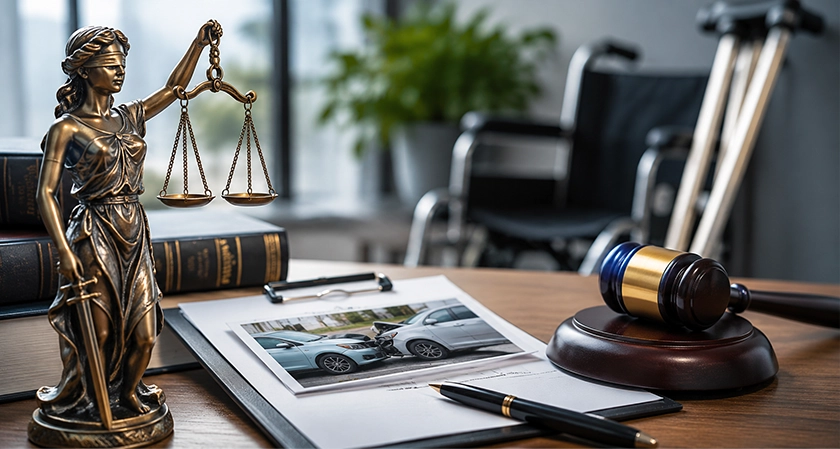
Rhode Island’s busy highways, neighborhood streets, workplaces, and commercial properties create many situations where an unexpected injury can lead to questions about legal responsibility. After an accident, an injured person may know what happened but still struggle to prove another party is responsible. A personal injury claim depends on evidence, not simply the fact that someone suffered harm. The injured person usually must link another party’s conduct to the accident, document the extent of the injuries, and support the compensation being requested.
Claimants should also understand that a case's strength can depend on how clearly medical records, photographs, witness accounts, and other documentation support their version of events. Speaking with a personal injury lawyer in Rhode Island can help someone understand what they must establish and identify gaps in the evidence. Knowing who bears this responsibility and how courts evaluate evidence can help an injured person approach each stage of a claim more clearly.
Who Carries the Burden of Proof?
In most personal injury lawsuits, the plaintiff carries the burden of proof. The plaintiff must show that the defendant acted negligently and that this conduct caused a compensable injury.
People evaluating a claim often benefit from advice based on the facts, medical records, and applicable state law. A personal injury lawyer can explain how the burden applies to a particular accident, identify missing evidence, and assess whether the available proof supports a civil claim. Early legal review also helps preserve records and avoid statements that weaken the case.
The defendant does not usually need to prove that no accident occurred. Instead, the defendant can challenge the plaintiff’s evidence, dispute the alleged injuries, or present an affirmative defense.
What Must the Plaintiff Prove?
A negligence claim generally requires proof of four elements. The plaintiff must show that the defendant owed a duty of reasonable care, breached it, caused the accident, and caused actual damages.
The required evidence depends on the facts. A driver’s traffic violation, a property owner’s maintenance record, or a witness’s account can help show a breach. Medical records and testimony then connect the accident to the physical condition.
Causation often receives close attention. A defendant can accept that an accident happened while arguing that another event caused the injury. Prior medical conditions, later accidents, and gaps in treatment can create disputes about causation and damage amounts.
The Civil Standard: Preponderance of the Evidence
Most personal injury cases use the preponderance-of-the-evidence standard, meaning the plaintiff must show the claim is more likely true than false.
The standard does not require absolute certainty or proof beyond a reasonable doubt. A judge or jury weighs the evidence and decides which version of events is better supported.
This standard differs from the criminal burden of proof, which requires proof beyond a reasonable doubt. A person can avoid criminal conviction while still facing civil liability if the evidence supports the injury claim under the lower civil standard.
Evidence That Supports a Claim
Evidence should address liability, causation, and damages. Accident reports can document the location, conditions, involved parties, and initial accounts. Photographs can preserve details that disappear after cleanup or repairs.
Medical records show diagnoses, treatment, restrictions, and recovery progress. Bills help document financial losses, while wage records can support a claim for missed income. Witness statements can clarify what happened before and after the accident.
Physical evidence also matters. A damaged vehicle, defective product, surveillance recording, or unsafe property condition can support the plaintiff’s account. Each item should connect to a disputed fact rather than simply add volume to the file.
How Defendants Challenge the Proof
A defendant can argue that the plaintiff failed to establish one or more required elements. Common arguments include lack of notice, reasonable conduct, an unrelated medical condition, or failure to reduce losses.
The defense can also challenge a witness’s memory, dispute a medical opinion, or present an alternative account of the accident. In some cases, the defendant claims that the plaintiff’s own conduct contributed to the injury.
Comparative fault rules can reduce compensation when the plaintiff shares responsibility. The exact effect depends on the governing state law and the facts the court or jury finds.
What Happens If Evidence Is Evenly Balanced?
If the evidence is evenly balanced, the plaintiff usually does not meet the preponderance standard. The party carrying the burden loses on the disputed issue.
That result explains why minor details can matter. A prompt medical examination, consistent treatment history, preserved photographs, and accurate testimony can strengthen the connection between the accident and the claimed losses.
The burden can shift for limited issues or defenses, depending on the law and the case. A legal professional can identify those issues before a complaint, deposition, or settlement negotiation.
Conclusion
The burden of proof requires an injured person to build a supported account of duty, breach, causation, and damages. The usual civil standard asks whether that account is more likely true than false. Anyone considering a claim should preserve photographs, contact information, medical records, wage documents, and accident reports. A timely review of those materials with qualified counsel can reveal evidence gaps and clarify the next legal step.














Comments