>>
Technology>>
Aviation>>
TSA in Crisis: 300 Officers Qu...TSA in Crisis: 300 Officers Quit, Sickouts Surge as Shutdown Chaos Strands Thousands in Airport
The Silicon Review
11 March, 2026
Author:
The Silicon Review Team
TSA absences doubled and 300 officers quit as the shutdown forces screeners to work without pay. The result: hours-long security lines, missed flights, and mounting fury at airports across America.
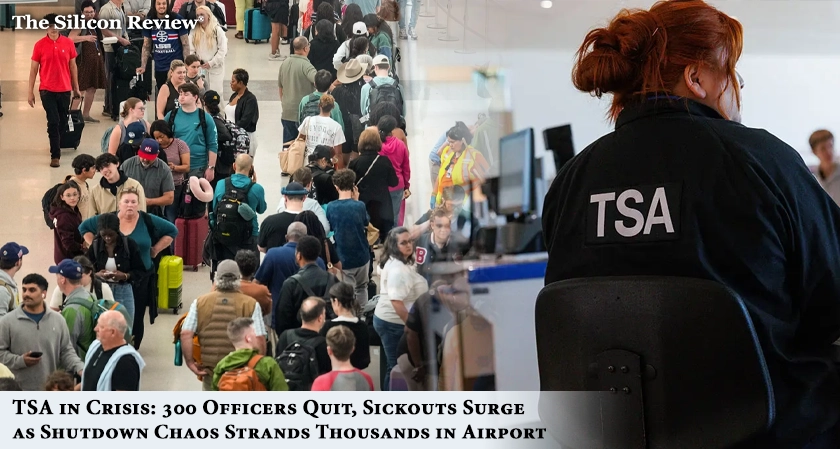
The scenes playing out at America's airports this week resemble travel nightmares come to life. At Hartsfield-Jackson Atlanta, security lines snaked past baggage claim and into parking garages. At Chicago O'Hare, families wept as they watched flights depart without them. The cause is not weather or mechanical failure, but a government shutdown now entering its fourth week.
TSA absenteeism has doubled to 8%, meaning one in every 12 screeners failed to report for duty Tuesday. More than 300 officers have resigned since funding lapsed, walking away from careers they can no longer afford. Those who remain are essential personnel legally required to work without pay, their bills mounting, and their mortgages unpaid.
"I haven't been paid in 24 days. My landlord doesn't care about back pay. My kids need to eat now," said Maria Gonzalez, a 12-year TSA veteran at Newark, describing why she called out sick for the first time in her career. "I cannot keep working for free while my family falls apart."
Passengers describe sheer frustration. At O'Hare, travelers reported waiting over an hour at checkpoints, missing connections, sleeping on terminal floors. Business travelers calculate ruined deals against mounting hotel bills. Parents carry sleeping toddlers through labyrinths of stanchions, praying for open bathrooms.
The cause is pure political gridlock. The shutdown stems from a standoff between the White House and Congress over immigration policy, border funding, and debt ceiling negotiations a fight with nothing to do with aviation but everything to do with the people keeping it running. TSA officers are deemed essential precisely because their absence creates the chaos now unfolding.
Former TSA Administrator John Sanders warned: "We are watching the systematic dismantling of our aviation security workforce. These are skilled professionals. When they leave, they don't come back. The damage will take a decade to repair."
For passengers, the crisis translates into simple math. Arrive three hours early becomes four. Four becomes five. Five becomes not enough. The frustration is raw and human directed not at screeners doing the impossible with nothing, but at the system that abandoned them.